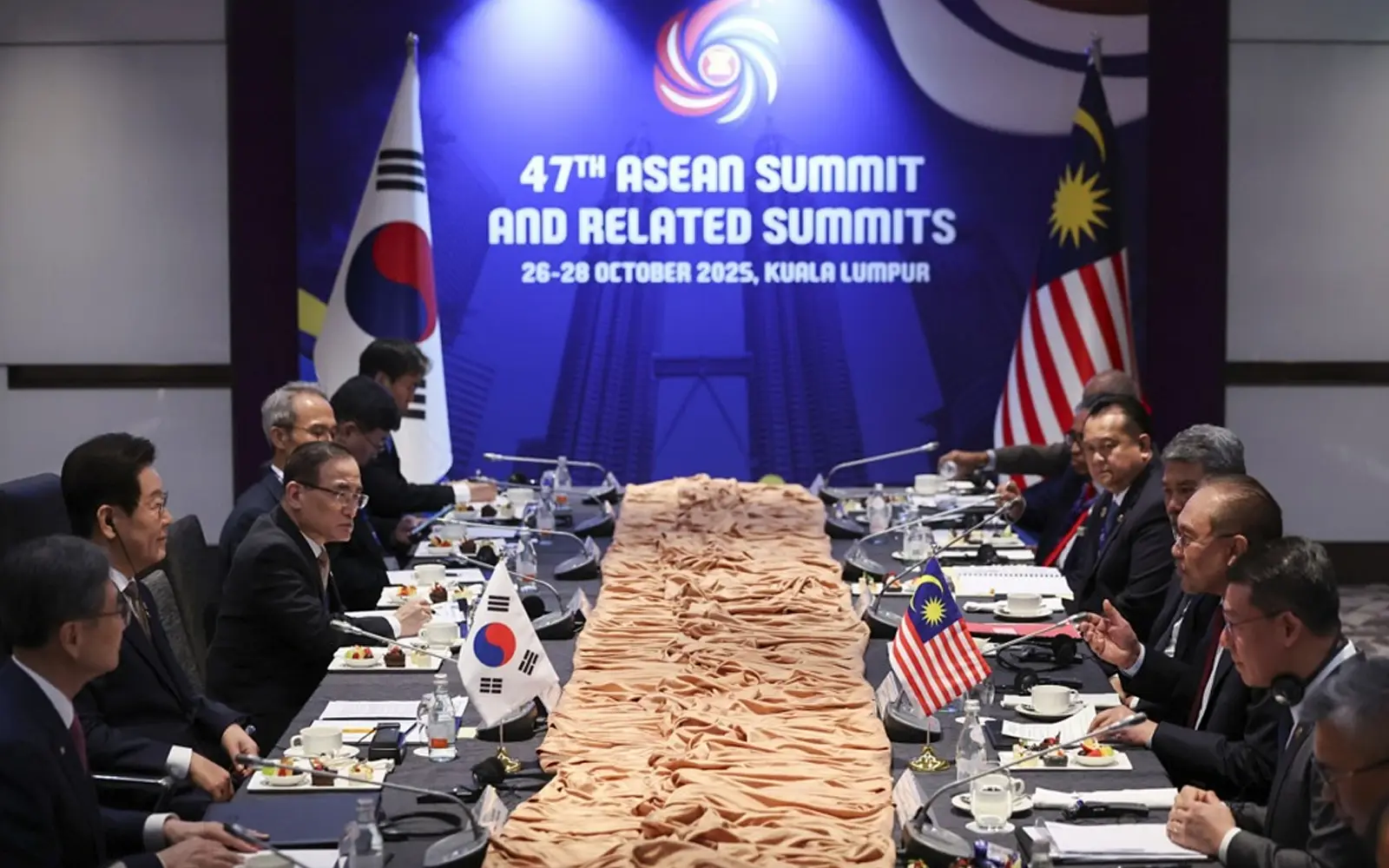
Strategic Economic Integration and Global Influence
2025 has marked a significant turning point for Asean under Malaysia’s leadership, with notable progress in economic integration, diplomacy, and inclusivity. Analysts and former diplomats have highlighted key developments that underscore the bloc's growing global influence and forward-thinking strategies.
Jamil Ghani, an analyst, emphasized that under Malaysia’s guidance, Asean is undergoing a subtle but crucial shift in its economic direction. He pointed out that the focus is no longer solely on reducing trade barriers but is now moving towards deeper and more strategic economic integration. This transformation is evident in several key initiatives.
One of the major milestones is the completion of 70% of negotiations for the Asean Digital Economy Framework Agreement. This ambitious pact aims to expand the region’s digital economy to an impressive US$2 trillion by 2030. Beyond this, Asean has launched two pivotal economic initiatives that signal a move towards enhanced industrial cooperation.
The first initiative is the establishment of the Asean Geoeconomics Task Force, which will coordinate regional responses to unilateral tariffs, supply chain disruptions, and investment risks. This effort is aimed at reinforcing economic resilience across the region. The second initiative is the launch of the Framework of Asean Industrial Projects-Based Initiative in May 2025. This framework is designed to facilitate cross-border manufacturing and infrastructure collaboration, streamlining the movement of goods, talent, and technology among member states.
According to Jamil, these initiatives indicate that Malaysia’s chairmanship is “steering the bloc towards a new phase of economic cooperation — one defined less by market liberalisation and more by strategic integration.”
Diplomatic Acumen and Convening Power
Observers have praised Asean’s enhanced diplomatic role in 2025, with the bloc successfully convening major global powers, including the US, China, Brazil, and South Africa. Former ambassador Ilango Karappunnam highlighted the landmark Asean-Gulf Cooperation Council (GCC)-China Summit in May as a standout achievement. He described the summit as a vital new trilateral channel, bringing together the resource-rich GCC and the technologically advanced China, with Asean serving as the bridge.
“This formulation, this triangular relationship, is extremely interesting because it promises a lot of synergies to come out of this kind of thing,” Ilango said, emphasizing the importance of sustaining this summit at future agendas.
Jamil noted that Malaysia’s diplomatic acumen was most evident in its ability to bring together actors within a single summit framework. Notably, Asean’s leadership helped deliver the Asean-US leaders’ joint vision statement and an upgrade in the Asean-China Free Trade Agreement 3.0, reaffirming the bloc’s global relevance.
“Malaysia positioned Asean as a credible convening force for inclusive rule-making amid intensifying great power rivalry and shifting global economic realities,” Jamil said.
Expansion and Conflict Resolution
The year under Malaysia’s chairmanship also witnessed significant achievements in regional inclusivity and peace-building. A major development was the official inclusion of Timor-Leste as Asean’s 11th member state — the first enlargement of the bloc since the 1990s. The expansion not only enhances the bloc’s diversity but also strengthens its collective voice on the international stage.
Additionally, the Kuala Lumpur Accord, brokered between Cambodia and Thailand, resulted in a sustainable ceasefire treaty, marking a milestone in regional conflict resolution and reinforcing Asean’s role as a mediator in Southeast Asia.
Conclusion
In summary, Malaysia’s chairmanship has propelled Asean into a new era, marked by strategic economic integration, robust diplomacy, and greater inclusivity. The expansion to include Timor-Leste and the successful brokering of peace between Cambodia and Thailand are testament to the bloc’s growing influence and capacity for positive change.
As Asean looks ahead, its ability to adapt, integrate, and convene diverse stakeholders will remain central to its continued relevance and leadership on the global stage.