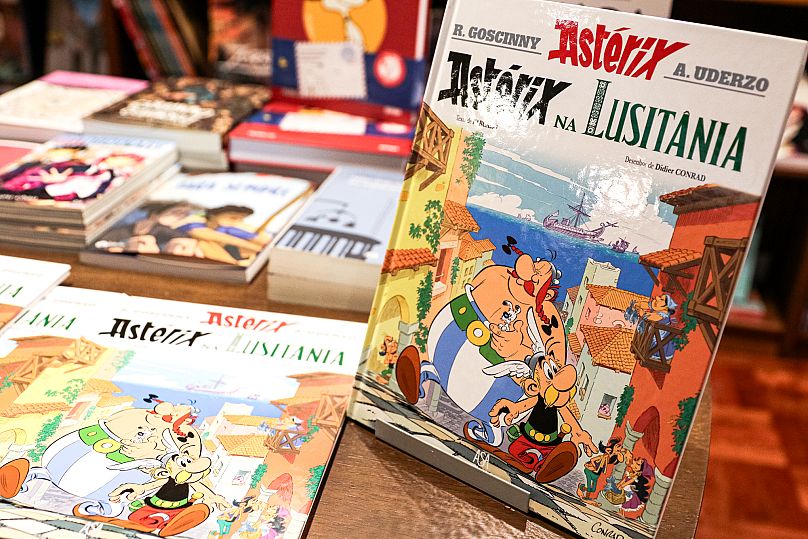
Astérix, the iconic Gaulish hero known for his resistance against Roman occupation through a magical potion, first made his debut in 1959 in the French magazine Pilote. Since then, Astérix and his loyal companion Obelix, along with their pet hound Dogmatrix, have embarked on numerous adventures across the Roman Empire and beyond. However, one region that had been notably absent from their journeys was Lusitania, the ancient territory corresponding to modern-day Portugal.
This gap has now been filled with the release of "Astérix in Lusitania," the 41st album in the series. This is the seventh album drawn by Didier Conrad, who took over from Albert Uderzo, the original creator of the characters. It is also the second script written by Fabrice Caro, following "The White Lily."
The album has been an overwhelming success, particularly in Portugal. According to David Lopes, general director of the Leya group, it broke a record for the most sales in the first four days. This achievement was confirmed by Vítor Silva Mota, the series' editor in Portugal, as well as by the large crowd that attended the book's presentation at one of the largest rooms in the El Corte Inglés cinema complex in Lisbon.
Since its launch on October 23, "Astérix in Lusitania" has sold over 50,000 copies, with an initial print run of 80,000. Globally, five million copies have been printed, available in 25 countries and 19 languages, including less commonly spoken dialects like Mirandese.
The secret to the album's success lies in its signature blend of humor, puns, anachronisms, and subtle references to contemporary issues. The story subtly addresses topics such as anti-immigration rhetoric and the influence of large economic groups, all while maintaining the lighthearted spirit that has made the series beloved for generations.
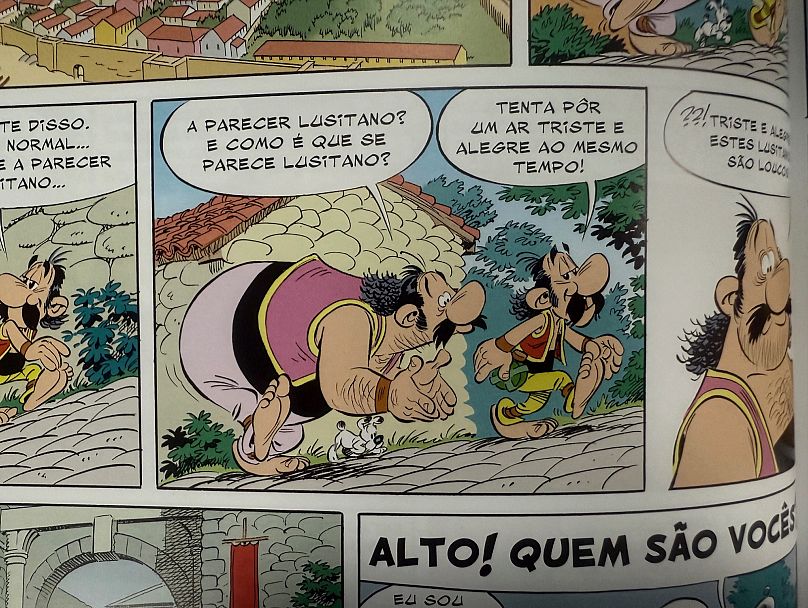
In "Astérix in Lusitania," readers are immersed in the culture of Portugal. They encounter fado music, sung by a Lusitanian named Amália, experience the famous pastéis de nata (custard tarts), and even taste codfish, which Obélix famously dislikes. The album also highlights Portuguese pavements, tiles, and the concept of "saudade"—that bittersweet feeling captured in Astérix’s words to Obélix when they dress as Lusitanians: “Try to look sad and happy at the same time.”
Comedian Hugo van der Ding, who presented the book, noted that many readers initially thought, “We’re nothing like that!” but by the end, they admitted, “Yes, we are all that.”
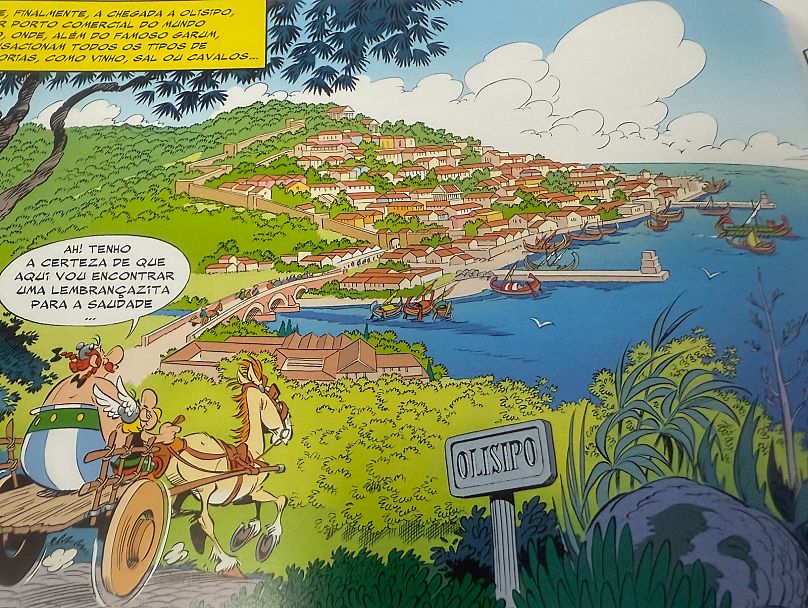
The album also includes nods to contemporary Portugal, such as an ancestor of the XXVIII tram in Olisipo (Lisbon), a revolutionary called MCMLXXIV, and a young footballer wearing a shirt with the number VII.
During the creation of the album, Fabrice Caro and Didier Conrad discussed the challenges and inspirations behind the project. When asked why it took so long for Astérix and Obélix to visit Portugal, Caro expressed surprise, noting that it seemed like an obvious destination. He pointed out that Portugal is close to Gaul, accessible by boat, and has a rich cultural heritage.
Didier Conrad added that after the release of "Astérix and the Picts" in 2013, there was strong interest from Portuguese fans, particularly Vítor Silva Mota, to create an album set in their country. While previous writers may have hesitated, Caro was eager to bring the story to life.
When asked about the inclusion of Portuguese clichés, Caro highlighted the importance of hospitality, which he initially overlooked but later incorporated after visiting Portugal with the editor. Conrad, on the other hand, was struck by the climate, which he compared to Texas, and the prevalence of decorative tiles, even under sinks.
Caro acknowledged the challenge of continuing the legacy of Uderzo and Goscinny, two geniuses whose work set a high standard. He emphasized the need to maintain the spirit of benevolent humor and shared laughter that defined the series.
Conrad, who took over the drawing duties after Uderzo, described the process as relearning his craft, as he had to adapt to Uderzo’s style. Despite his own artistic development, he found the experience rewarding.
The album also touches on current social issues, such as anti-immigration discourse and tourism, reflecting the society in which it is set. Caro noted that each album offers a snapshot of the era, incorporating both classic and contemporary themes.
Regarding the character of Baba, the black pirate, Conrad explained that the character originated as a parody of another series. Over time, it became associated with stereotypes, leading to concerns about representation. North American publishers, in particular, raised issues about the character, prompting ongoing discussions about cultural sensitivity.

Looking ahead, Caro mentioned that Didier Conrad will continue to work on future albums. He is currently serving as an interim screenwriter, with Jean-Yves Ferri expected to return soon. For now, Caro remains enthusiastic, enjoying the creative process and the fun of bringing new stories to life.