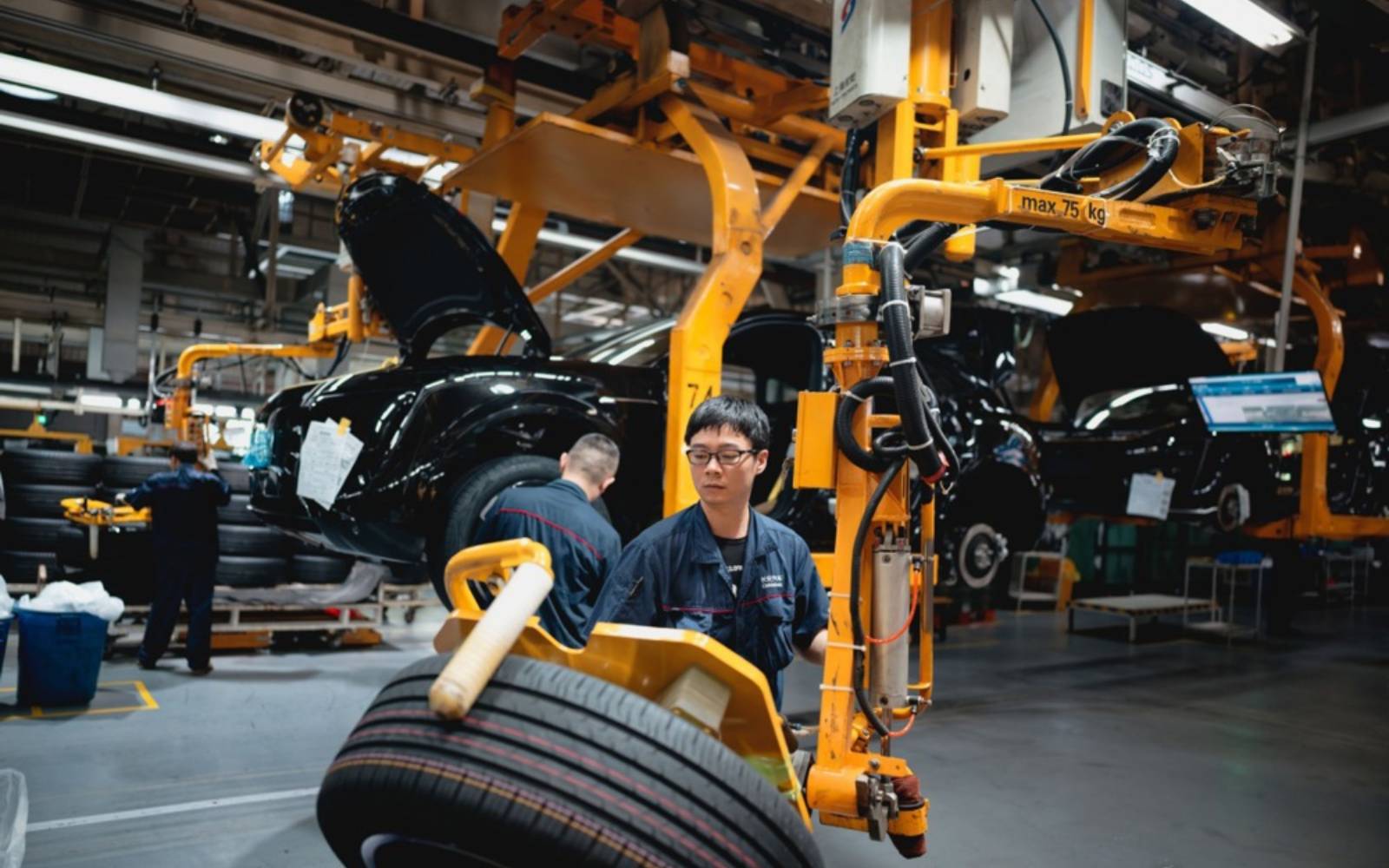
China's Factory Activity Contracts for Seventh Consecutive Month
China’s factory activity continued to shrink in October, marking the seventh consecutive month of contraction. This development highlights the ongoing challenges faced by the country's manufacturing sector amid global economic uncertainties. The National Bureau of Statistics (NBS) reported that the Manufacturing Purchasing Managers’ Index (PMI) stood at 49.0, indicating a decline in industrial activity.
This figure fell short of the expected 49.6 based on a Bloomberg survey of economists and represented a decrease of 0.8 percentage points compared to the previous month. According to NBS statistician Huo Lihui, several factors contributed to this contraction, including the increasingly complex international environment. He also pointed to the "Golden Week" National Day holiday at the beginning of October as a contributing factor, as this period typically leads to reduced factory activity.
Despite the contraction, Huo noted that China's overall economic output remained generally stable. October’s PMI reading was the lowest recorded this year, matching the 49.0 level seen in April. This marked the start of a prolonged period of contraction as factories navigated the fluctuations caused by the US-China trade war.
The recent high-stakes trade talks between President Xi Jinping and former US President Donald Trump in South Korea have brought some relief. Trump announced that he would halve the 20% tariff on Chinese goods, while Xi agreed to suspend certain export restrictions on the rare-earth sector for one year. Additionally, China plans to resume purchases of US soybeans after a temporary halt during the current harvest season.
In addition to the manufacturing PMI, official data released on Friday showed that the non-manufacturing PMI, which measures activity in sectors such as services and construction, increased slightly to 50.1 in October from 50.0 in September. This figure aligned with the Bloomberg forecast, indicating a marginal improvement in non-manufacturing activities.
Key Factors Affecting China's Manufacturing Sector
- International Trade Uncertainty: The ongoing trade tensions between China and the United States have created an unpredictable environment for manufacturers.
- Golden Week Holiday: The National Day holiday led to a slowdown in factory operations, affecting production levels.
- Global Economic Conditions: The complex international landscape has impacted demand and supply chains, further straining the manufacturing sector.
- Policy Adjustments: Recent trade agreements between the two countries may provide some relief, but long-term stability remains uncertain.
Outlook for the Manufacturing Sector
While the manufacturing PMI indicates contraction, it is essential to consider the broader economic context. The non-manufacturing PMI shows a slight improvement, suggesting that other sectors are performing better. However, sustained growth in the manufacturing sector will depend on resolving trade disputes and stabilizing global markets.
Experts suggest that China's ability to adapt to these challenges will be crucial in maintaining economic stability. Continued monitoring of key indicators such as the PMI will be necessary to gauge the health of the manufacturing sector and its impact on the overall economy.
As the situation evolves, both domestic and international stakeholders will be closely watching how China navigates these economic headwinds. The outcome of future trade negotiations and policy decisions will play a significant role in shaping the trajectory of the manufacturing sector in the coming months.