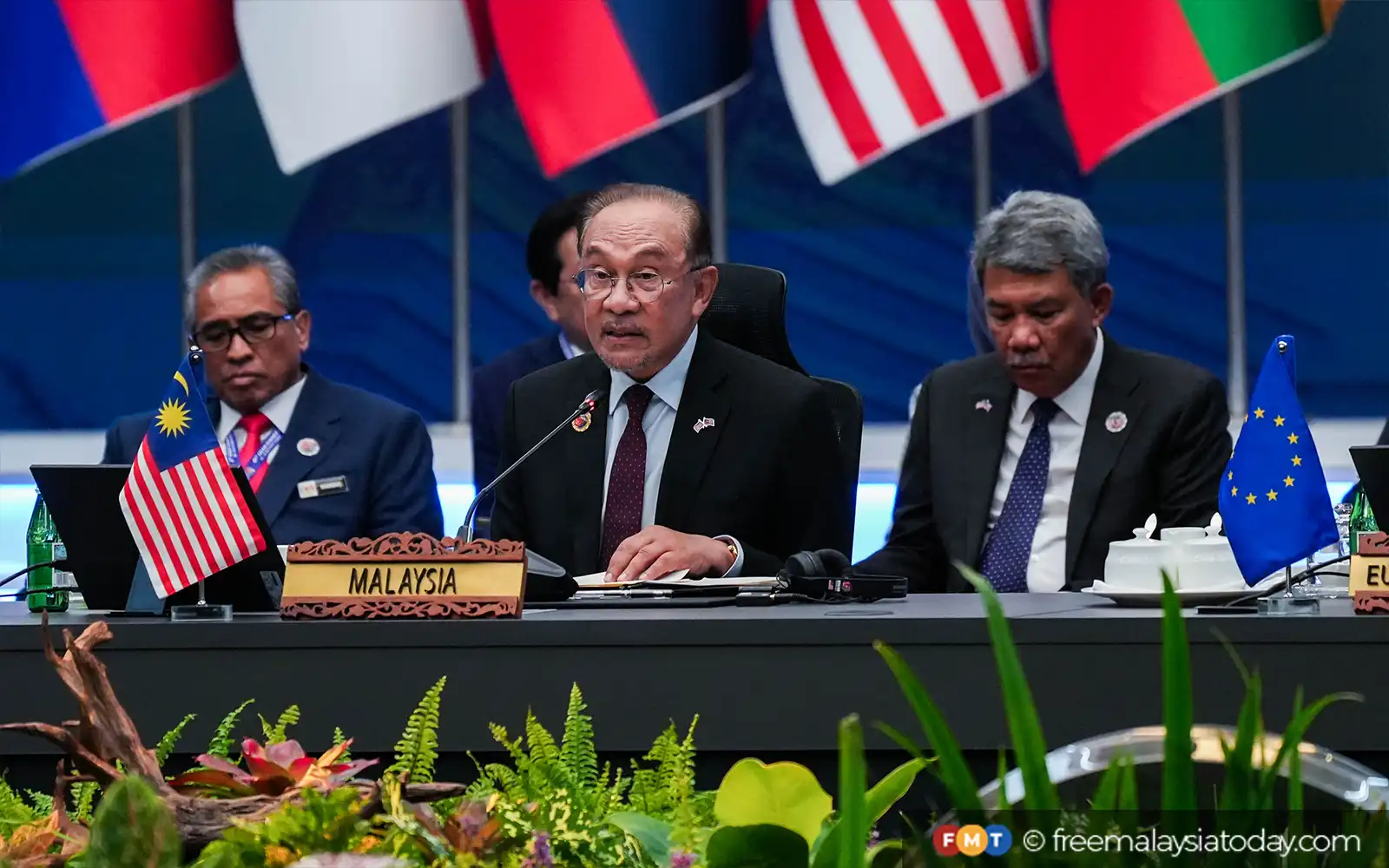
Malaysia's Role in Highlighting RCEP Progress at Apec
Malaysia has a unique opportunity to showcase its achievements under the Regional Comprehensive Economic Partnership (RCEP) during the Apec Economic Leaders’ Meeting in Gyeongju. According to Denis Hew, a senior fellow at the Lee Kuan Yew School of Public Policy, the RCEP, which is an Asean-led initiative, can serve as a stepping stone towards Apec’s long-term goal of establishing a Free Trade Area of the Asia-Pacific (FTAAP).
Hew emphasized that RCEP demonstrates how deeper trade integration among its members can act as a "buffer" against external shocks such as aggressive reciprocal tariffs from the US and ongoing supply chain disruptions. He suggested that Malaysia can use the Apec forum to highlight the progress made in implementing RCEP and potentially revive discussions on FTAAP.
RCEP and Its Growing Significance
Malaysia recently concluded its term as Asean chair at the bloc’s 47th summit, where Southeast Asian leaders met with their partners under the RCEP framework. The negotiations for RCEP began in 2012, aiming to consolidate Asean’s existing free-trade agreements with dialogue partners into a unified framework for regional trade and investment.
The agreement gained more prominence after the US withdrew from the Trans-Pacific Partnership in 2017. Recently, several economies, including Bangladesh, Chile, Hong Kong, and Sri Lanka, have expressed interest in joining RCEP. South Korea, a member of RCEP, is hosting this year’s Apec summit with the theme “Building a Sustainable Tomorrow,” focusing on connectivity, innovation, and shared prosperity across the Asia-Pacific region.
Diversifying Trade and Investment Patterns
Jayant Menon, a senior fellow at the ISEAS–Yusof Ishak Institute, acknowledged Malaysia’s successful Asean chairmanship and the US tariff concessions it secured. However, he cautioned against complacency, stating that the US is no longer a reliable trading partner.
Menon advised Malaysia to leverage its participation in Apec, RCEP, and other groupings to diversify its trade and investment patterns, reducing what he described as a "high dependency on the US." He noted that regional groupings like Apec and RCEP can play a crucial role in this transition.
Alignment with Apec's Agenda
Hew also pointed out that Malaysia’s priorities during its Asean chairmanship, including deeper integration, digital transformation, enhanced connectivity, and sustainability, are "very much aligned" with Apec’s agenda this year. This alignment presents an opportunity for Malaysia to showcase the discussions and agreements reached under its Asean leadership while using the Apec platform to sustain momentum and translate these priorities into tangible progress.
According to Hew, both Asean and Apec share a commitment to "open regionalism," meaning trade and investment liberalization that complements the global multilateral system rather than replacing it. Ensuring policy continuity between the two groupings will help reinforce shared objectives such as trade facilitation and regional connectivity.
Prime Minister Anwar Ibrahim's Participation
Prime Minister Anwar Ibrahim is scheduled to attend two key sessions of the summit, meet regional industry players, and engage with the US Apec Business Coalition before returning to Kuala Lumpur on November 1. His participation underscores Malaysia’s active role in promoting regional economic cooperation and strengthening ties with key partners.