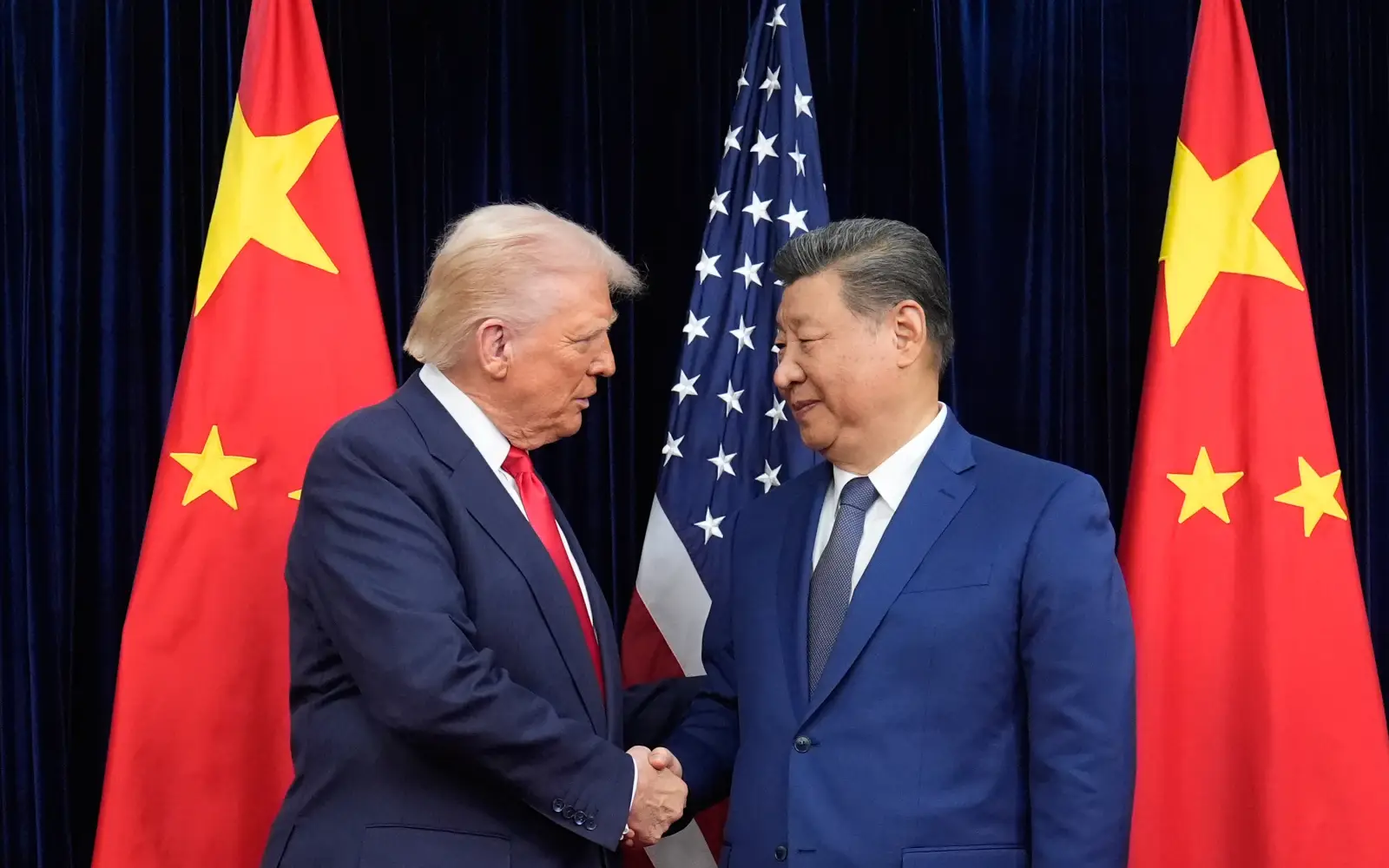
Asian Stock Markets Experience Volatility Following US-China Summit
Asian stock markets experienced fluctuations on Thursday following a high-stakes meeting between the leaders of the United States and China. The summit, which took place in South Korea, resulted in an agreement aimed at easing tensions between the world's two largest economies.
US President Donald Trump described his meeting with Chinese President Xi Jinping as "amazing." This was their first meeting since 2019, during Trump’s first term. According to state media in Beijing, Xi stated that they had reached a "consensus" on economic and trade issues.
The reactions from stock markets were relatively subdued. Japan's main benchmark index closed flat after the central bank decided to keep interest rates unchanged. In contrast, the Shanghai and Sydney markets saw moderate declines. Hong Kong, however, managed to recover from an afternoon fall, finishing the day slightly lower. Seoul saw a slight increase, partly due to strong performance from tech giant Samsung Electronics, which reported a 32% year-on-year rise in third-quarter profits, along with gains in the automotive sector. Taipei remained largely flat for the day.
The meeting between Trump and Xi occurred against the backdrop of a tech-driven bull run in global markets. This trend was further supported by a recent interest rate cut by the US Federal Reserve, confirmed by Chair Jerome Powell on Wednesday. However, Powell's announcement also raised doubts about an additional rate cut in December, causing some jitters in US markets and leading to an increase in the value of the dollar.
Despite these concerns, the Nasdaq recovered and closed at a fourth consecutive record high. This was driven by another gain from artificial intelligence giant Nvidia, which became the first company to reach a $5 trillion market value.
The focus of the financial world was on the Xi-Trump meeting in Busan, South Korea. Trump mentioned that the talks led to a one-year deal on China's supply of crucial rare earths, materials essential for advanced electronic components across various industries. He also noted that tariffs on China's exports of chemicals used to make the deadly drug fentanyl would be reduced to 10%, bringing overall US tariffs on Chinese goods down to 47%.
In addition, Trump highlighted that China had agreed to purchase "tremendous" amounts of soybeans and other agricultural products. Xi urged teams from both countries to "finalise follow-up work as soon as possible," emphasizing the need for "tangible results to set minds at ease about the economies of China, the United States and the world," according to Xinhua, a state news agency.
Julian Evans-Pritchard of Capital Economics commented that while the reversal of some US tariffs on China may not have a significant impact, given that Chinese exporters had largely ignored them, the de-escalation removes a key downside risk to the near-term outlook.
In Europe, London and Paris saw initial drops in trading, while Frankfurt's main benchmark index rose slightly. The overall market sentiment reflected a mix of cautious optimism and lingering concerns about the ongoing economic dynamics between the US and China.