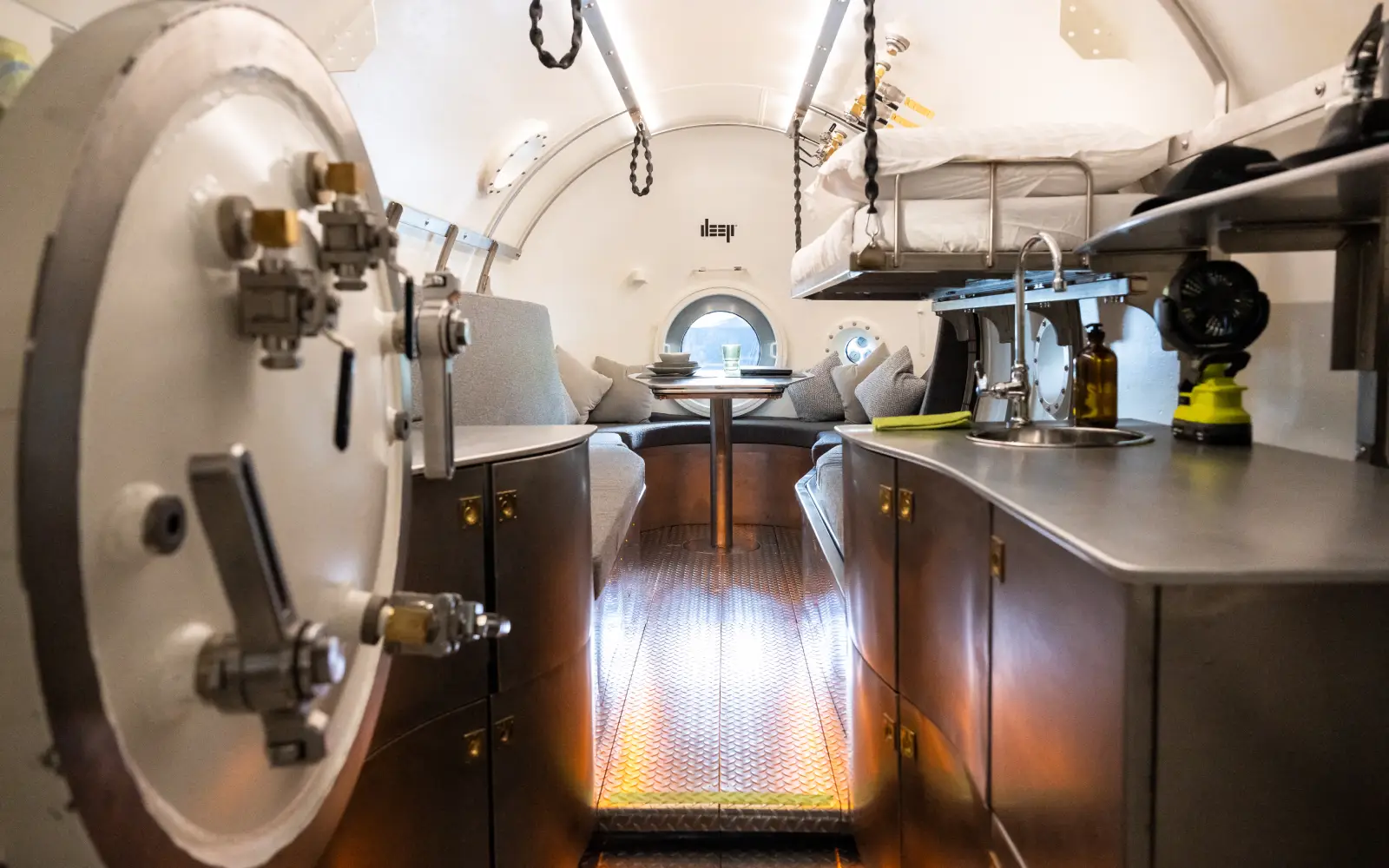
Introduction to Vanguard: A New Era in Underwater Research
In a groundbreaking move, the UK-based company DEEP has introduced a revolutionary concept called Vanguard, designed as a "subsea human habitat." This innovative project aims to enable scientists to conduct research underwater for extended periods, potentially up to a week. The prototype was recently unveiled at a hangar in Miami, Florida, marking a significant step forward in oceanographic exploration.
Vision for Extended Underwater Exploration
The primary goal of Vanguard is to allow researchers to stay submerged for longer durations than traditional expeditions, which typically last only a few hours. By doing so, it opens up new possibilities for studying unexplored zones in the oceans. According to Norman Smith, DEEP’s chief technology officer and lead engineer behind Vanguard, this development could revolutionize marine science by making deeper ocean areas accessible to divers.
Design and Structure of Vanguard
Vanguard is composed of three main sections: a living chamber, a diving centre, and a base. The living chamber, measuring 12 metres (40 feet) long by 3.7 metres (12 feet) wide, is where scientists will eat, sleep, and work. It is engineered to withstand the pressure of ocean water, ensuring the safety of up to four occupants.
The "diving centre" serves as a crucial link between the underwater base and the surface. This base is anchored to the seabed, providing stability against waves and storms. This design ensures that the entire habitat remains secure and functional in various ocean conditions.
Surface Support Infrastructure
In addition to the underwater components, Vanguard includes a floating structure on the surface of the water. This structure plays a vital role in transporting compressed air, powering the vessel, and facilitating communication with the outside world. This integration of surface and underwater systems enhances the overall functionality and safety of the habitat.
Future Plans and Applications
Currently, Vanguard is situated at a depth of 20 metres (65 feet), which is accessible by scuba diving. However, DEEP is already working on prototypes that can reach depths of up to 200 metres. This advancement could open up even more remote and unexplored areas of the ocean for scientific study.
When DEEP deploys Vanguard for the first time in the coming weeks off the coast of Florida, the company hopes that scientists will utilize the habitat for long-term underwater conservation projects. One such initiative could involve coral restoration, which is essential for maintaining healthy marine ecosystems.
Potential Impact on Marine Science
The introduction of Vanguard represents a significant leap in marine research capabilities. By enabling scientists to stay underwater for extended periods, it allows for more comprehensive studies of marine life, environmental changes, and ecological interactions. This could lead to new discoveries and innovations in conservation efforts.
Moreover, the ability to conduct long-term research in underwater environments may provide valuable data for understanding climate change, ocean acidification, and other critical environmental issues. The insights gained from these studies could inform policies and strategies aimed at protecting our oceans.
Conclusion
With its innovative design and potential applications, Vanguard stands as a beacon of hope for the future of underwater research. As DEEP continues to develop and refine this technology, the possibilities for scientific exploration and conservation are truly exciting. The journey into the depths of the ocean is just beginning, and Vanguard is set to play a pivotal role in shaping the future of marine science.