Bajaj Auto Announces Major Workforce Reduction at KTM
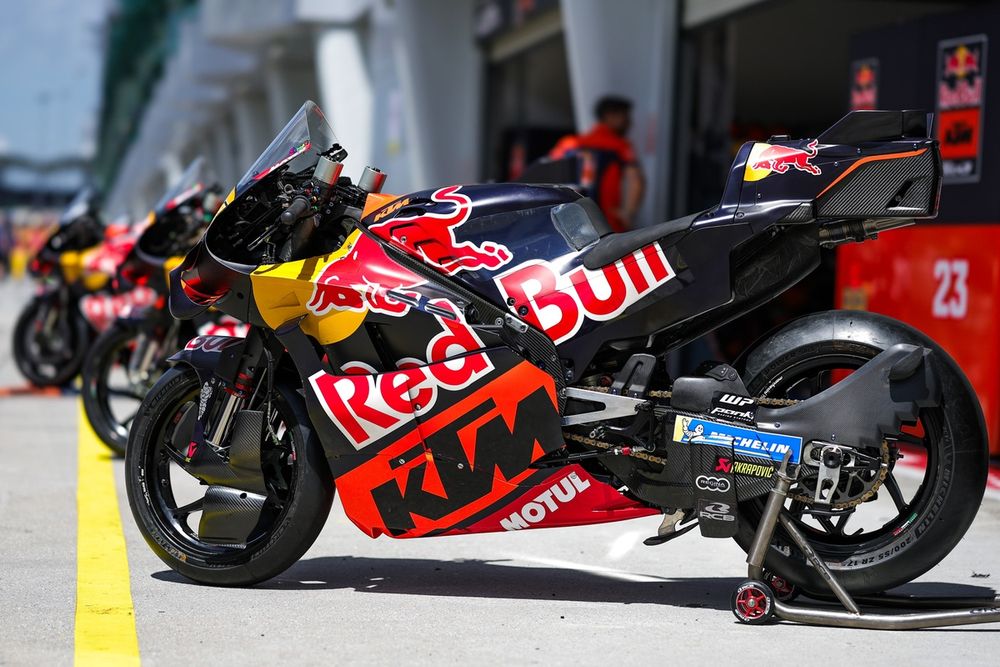
Bajaj Auto has announced plans to reduce its workforce by over 50% across several departments, including the motorsport division, as it moves closer to finalizing the acquisition of KTM. The decision comes as part of a broader strategy to cut costs and streamline operations.
Rajiv Bajaj, the managing director of Bajaj Auto, shared his insights during an interview with CNBC TV18. He emphasized that the company aims to significantly reduce expenses across various departments, which will have a direct impact on KTM and its associated MotoGP teams.
“This is really low-hanging fruit. We see an opportunity to reduce overheads by more than 50%, including R&D, marketing (including racing), operations, and general administration,” Bajaj said.
He also mentioned that the previous management had already reduced the workforce from 6,000 to 4,000 employees, which he still considers too high. “Of these 4,000, only about 1,000 are blue-collar; 3,000 are white-collar, which is perplexing because the blue-collar employees make the motorcycles.”
Bajaj pointed out that future volume shifts will affect blue-collar employees relatively lightly, but the issue lies with the expensive white-collar headcount. “It reminds me of Mark Zuckerberg's words about managers managing managers managing managers who manage the people who do the work. The management overhead and bureaucracy in this otherwise excellent organisation were astonishing.”
Criticism of Previous Management
Bajaj was critical of KTM’s former management, though he did not explicitly name Stefan Pierer, the former majority shareholder, whom he holds largely responsible for the company’s financial difficulties. “We were all taken by surprise, most of the industry was quite shocked at how rapidly this developed,” he said.
He recalled advice from his first management guru, Dr John Wallace, who once said that the single biggest reason for corporate demise is corporate greed. “I have really witnessed this play out at KTM over the last 12 months in particular.”
Bajaj identified three types of greed that contributed to KTM’s downfall. “First, operational greed, best exemplified by what happened in the last couple of years when KTM Austria kept producing and overproducing, even though the spike in demand post-COVID had declined. As a result, KTM distributors and dealers worldwide were carrying over a year's worth of inventory, which was preposterous.”
“Second, what I would call strategic greed. Companies often get into businesses they have no business getting into. In the case of KTM Austria, the best example was getting into the bicycle business, specifically the electric bicycle business.”
“These two factors combined to take KTM to insolvency in a matter of months. Now, you might say that Bajaj was part of it, and I would concede that yes, we were also part of what went wrong, but as a minority partner, we could not prevent this.”
Governance Greed and New Leadership
Bajaj also spoke about governance greed, where certain decisions were made without the knowledge or input of key stakeholders. “I can share that we did our best to resist it, so much so that it led eventually to the third kind of greed, which I may call governance greed, where certain decisions were taken either without our knowledge, without our information, or sometimes without following due process.”
Despite the challenges, Bajaj expressed confidence in KTM’s revamped management. “This is a problem not caused by 99% of KTM employees. This is a problem of the erstwhile top management of KTM, and most of them are gone,” he said.
“What we have now in place is a wonderful new team that I personally feel very confident about. The entire team is already in place, barring one vacancy, which will be filled in the coming months. It’s a combination of some of our older colleagues, who are still very passionate and committed to KTM, particularly in areas like product planning, R&D, and legal, and some outstanding new colleagues, led by our new CFO and new CHRO.”
Ongoing Acquisition Process
Although Bajaj has already injected several rounds of capital funding to keep KTM afloat and now effectively controls the Austrian manufacturer, the Indian conglomerate is still awaiting approval from the European Commission to formalize the takeover.
Related Articles