A New Beginning with a Cold Reality
Last September, my husband and I left Surrey with stars in our eyes. We had spent years searching through towns and villages across South East England to find a new home that met all our requirements: good schools, old houses, and easy access to London – but at a fraction of the price.
Eventually, we found a 2,200 square foot Victorian townhouse in Bedford (about 50 miles or 40 minutes on a train to the capital) that didn’t need work, and only cost marginally more than the house we were in at the time. It gave us extra breathing space for our family to grow, for us to work, and for people to stay. It was perfect! That was, until October arrived.
Our previous home was a 1,300 square foot, three-bedroom chalet – my husband’s grandmother’s house – that was in dire need of a facelift. The textured wallpaper was peeling from the walls, the bathroom hadn’t been touched since former prime minister Margaret Thatcher was in office, and the (originally white) vinyl floor tiles had become a permanent shade of sludge. The house needed rewiring, replumbing, pretty much re-everything and the cost to overhaul would have been around £250,000 – around half the house’s value.
We didn’t have that money, and even if we did win the lottery or rob a bank to gain the necessary funds, we’d still have had the gargantuan inconvenience of moving out while the work took place (with two small children in tow), then moving back in. It seemed, in short, expensive and hellish. So we looked to start afresh instead.
When we saw our current house, we fell in love. Crammed with original details, it had been lovingly restored by its previous owners and was full of history and charm. It’s a four-bedroom house with additional office space, a large attic room for guests, and a long, expansive kitchen. The kind of house that we could stay in for years to come – a place where our children could grow and have their own personal space.
We made an offer and moved in three months later, in mid-September.
When we considered buying our new home – with all its much-desired space – I hadn’t thought about the heating bills in the colder months. (Well, my husband had. His go-to phrase throughout the house-shopping experience had been “this will be expensive to heat”, but I just thought this was just a phrase that middle-aged men liked to say.)
The price to stay cosy in our old house was £180 per month on energy bills due to its thick cavity walls, double-glazed windows, and large front porch. I’d play with the heating all the time, dialling it up at the slightest perceived chill; I wore t-shirts year-round, and barely felt a chill in January. But soon, I was to learn the fresh hell of a cold winter.
We had a few good days in our new home before it started feeling chilly – at first, I put it down to the fact that we hadn’t mastered the smart meter yet. My sister stopped by to see the house, and all I could say throughout her visit was, “I swear it won’t be this cold normally” on repeat like a skipping record. But when we eventually figured out the smart meter, it didn’t end the chill. My husband explained that he’d only put it on for a few hours a day. “It’s expensive,” he said, “trust me”.
Read Next: The perfect daily routine to feel energetic as the days get shorter
Now that I was at home and absolutely freezing, he had my attention – apparently, he’d budgeted for £600 per month for heating and that, he estimated, equated to about three hours of heating per day in our uninsulated Victorian abode. If we increased the heating costs, we’d have to cut down on spending elsewhere in our lives, like holidays or family days out (which I didn’t want to do). Suddenly, I began to understand the charm of a new build.
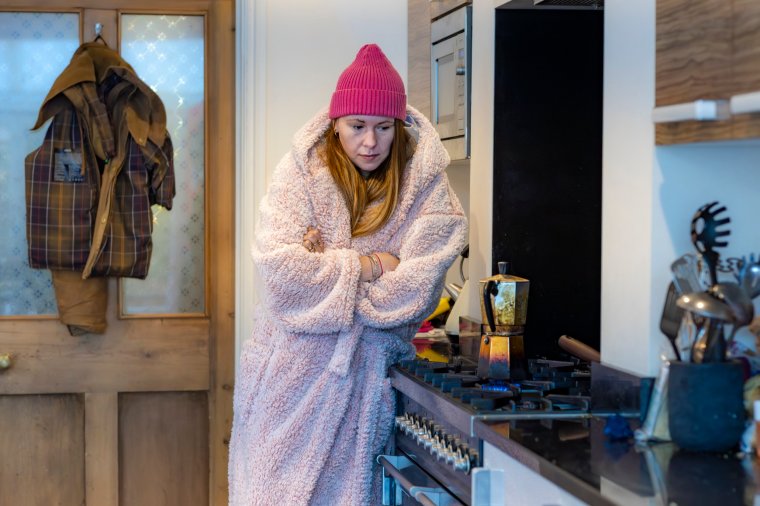
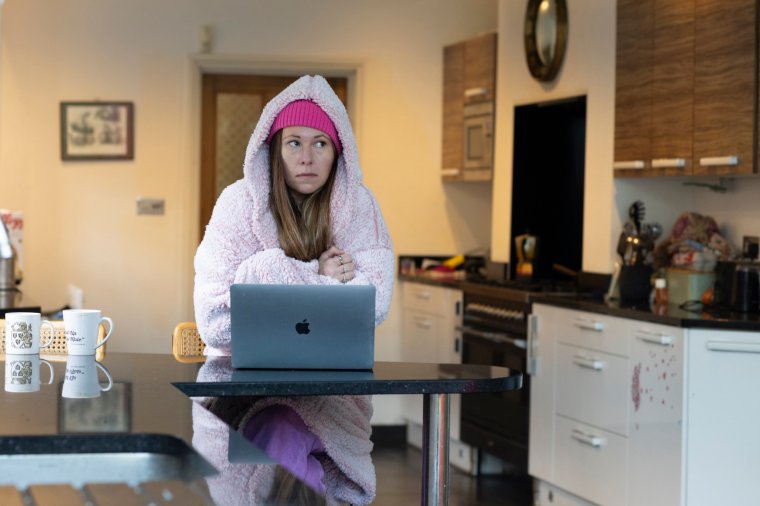
As winter drew in, we started living in our kitchen – the only part of the house with double glazing. Compared with the frosty tundra of our hallway, it was a warm summer’s day in there. In an attempt to fend off the freeze, we kept our curtains drawn like neighbourhood hermits, and I began to adapt to life in a frigid home by wearing dressing gowns (“indoor coats”, as I like to think of them) throughout the day.
While my husband goes into the office three days a week, I work from home, and so I found myself locked away in the kitchen in my fleeced indoor coat, only venturing out to the rest of the igloo when necessary. Whenever packages were dropped off, or the doorbell rang, I’d often forget to remove my dressing gown, until one day I realised that I must have looked either permanently sick or slightly unbalanced to everyone I greeted.
My husband and I looked into ways to improve our situation – getting a draught excluder for all the doors was one idea, another was buying an electric heater. But when we looked into ordering stand-alone heaters, the majority of brands would have added a cost of 50p per hour, which would equate to about £150 on our electricity bill if we ran a few for more than four hours a day, which didn’t feel like much of a money save on the heating itself.
Instead, we resigned ourselves to life in our frosty castle for the winter and set up shop in the kitchen for four months. When summer rolled around, we breathed a sigh of relief as the stalactites started melting in our living room. On the plus side, we never had to worry about steamy nights of sweaty sleep – as we did in our previous well-insulated chalet – thanks to our new house’s inability to retain heat.
Ultimately, we’ve found that our new home is habitable without heating for about half the year, and during these more comfortable months we continue to pay £400 for gas and electricity in order to build up credit to buffer the blow of heftier winter bills.
A year on from our first winter here and as Christmas decorations start filling the shelves, we’re trying to pre-empt our imminent freeze. We’ve bought a thermal curtain for the front door, and ordered a heater for my two-year-old son’s room – the room I most consistently saw my own breath in. While last winter I wrapped my son up in pyjamas, I found that it provided little solace in the dead of night when I’d wake up panicking that he was overheating. A heater, therefore, seemed far more sensible than millions of layers (and midnight panics).
What have I learned about our house purchase? It goes without saying that if something seems too good to be true, it probably is. And of course there’s no way that we were going to move into a large, well-priced house in a good area, on a tree-lined street, without there being some hitch – whether it be poltergeists, rats, or freezing winters.
While I can’t say that it’s ideal to spend half the year in a highly flammable pink dressing gown holed up in our kitchen, I’ve adjusted to it. Overall, the house has brought us as much joy as we’d hoped it would – the children love running around it, we’re able to comfortably accommodate friends and family, and we can easily host birthday parties and dinners without overflowing or squeezing.
Looking back, perhaps I should have listened to my husband when he repeatedly brought up heating costs, but I’m a woman of aesthetics who just thought: “How much can heating really be?” A lot, it turns out. An absolute fortune.