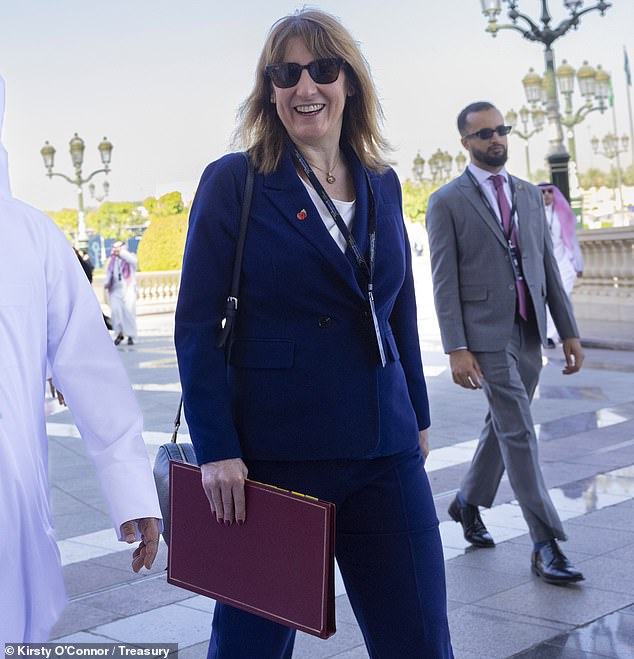
Rachel Reeves Faces Tough Choices as UK Economy Struggles
Chancellor Rachel Reeves has made it clear that the UK can "defy" grim economic forecasts, but she has also warned of looming tax rises as she prepares for her upcoming Budget next month. With a multi-billion pound gap in her spending plans, the Chancellor is working to address the challenges ahead.
In an article for The Guardian, Ms. Reeves acknowledged that the task of managing the economy will be made harder by a larger-than-expected downgrade to productivity forecasts. Reports suggest that the Office for Budget Responsibility (OBR) is preparing to reduce its productivity forecasts by 0.3 percentage points. This could leave a gap in public finances of more than £20 billion, according to ex-Tory chancellor Sir Jeremy Hunt, who called it a "hammer blow" to Labour’s plans.
Ms. Reeves has pointed to Brexit, austerity, and the pandemic as factors that have left "deep scars" on the British economy. She has also hinted at the possibility of further tax increases, emphasizing that "necessary choices" must be made for the long-term benefit of the country.
There are growing speculations that Ms. Reeves might break Labour's manifesto pledges and raise income tax in the upcoming Budget. The Treasury is also considering proposals for a "mansion tax." The Institute for Fiscal Studies (IFS) has warned that Ms. Reeves may need to find £22 billion in tax rises or spending cuts to restore the £10 billion headroom she left herself against her debt targets in the Spring.
The gap in public finances is attributed to higher borrowing costs, persistent inflation, weaker growth, and the need to fund Labour's U-turns on winter fuel payments and welfare cuts. However, the hole in the public finances could be even larger than expected, with expectations that the OBR will make a bigger-than-expected cut to its trend productivity forecast.
The IFS has stated that a 0.1 percentage point downgrade to the productivity forecast would increase public sector net borrowing by £7 billion in 2029–30. A 0.3 percentage point cut could result in a £21 billion hit for Ms. Reeves. Other economists have warned that the Chancellor faces a black hole of up to £50 billion, which would need to be filled by tax rises and spending cuts.
In her article, Ms. Reeves admitted that the UK's productivity has been "too weak" since the financial crisis. She emphasized that while past mistakes should not determine the future, the task ahead is to defy the forecasts and take necessary choices today, including at the Budget next month.
Ms. Reeves pledged to stick to her "fiscal rules" and bring down Britain's debt, but she appeared to rule out deeper spending cuts by stating there would be "no return to austerity." She argued that investment is the solution to the productivity challenge, and that investment cannot come at the cost of economic responsibility.
Without deeper spending cuts or increased borrowing, Ms. Reeves will be forced to raise taxes. She added that decisions made at the Budget will not come for free and are not easy, but they are the right, fair, and necessary choices.
In his own article for The Times, Sir Jeremy Hunt described the OBR's productivity downgrade as a "hammer blow" to Rachel Reeves' numbers. He called on the Chancellor to improve national productivity through public sector reform, which he said would offer a "double bonus" of better productivity forecasts and a boost to public finances.
Key Challenges Ahead
- Productivity Downgrade: The OBR is expected to lower its productivity forecasts, creating a significant financial gap.
- Tax Rises: Speculation about potential income tax increases and a mansion tax is growing.
- Fiscal Constraints: The need to find £22 billion in tax rises or spending cuts is critical to restoring fiscal stability.
- Economic Outlook: The UK economy faces challenges from higher borrowing costs, inflation, and weaker growth.
- Political Pressure: The Chancellor must navigate political opposition while making tough decisions for the long-term benefit of the country.
As the Budget approaches, the pressure on Rachel Reeves to deliver a balanced and sustainable economic strategy will only intensify. The decisions she makes will have far-reaching implications for the UK economy and its citizens.