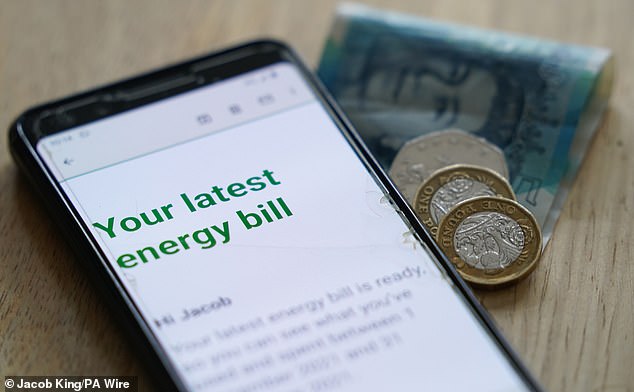
Understanding the Rise in Standing Charges
Standing charges on gas and electricity bills have significantly increased over the past six years, nearly tripling since the introduction of the energy price cap. This trend has raised concerns among households, particularly those trying to manage their energy costs by reducing usage.
According to analysis by This Is Money, fixed fees charged by energy companies to cover their operating costs now make up a larger portion of household bills than ever before. While the cost per unit of electricity and gas has stabilized after reaching record highs in 2022, standing charges have continued to rise. These charges are a fixed cost that cannot be reduced, making them a particular burden for households that try to save money by limiting their energy use.
Even with the introduction of lower standing charge tariffs next year, bills are likely to remain at similar levels as the cost is transferred to unit prices. This raises questions about why standing charges have reached such high levels and whether network and policy costs will continue to be added to people's bills.
What Makes Up Standing Charges?
Standing charges have surged over the past six years, and part of this increase is due to how they are calculated. Energy UK states that the majority of the standing charge covers the operating costs of suppliers, but network and policy costs also play a significant role.
For electricity, network costs account for 49% of the standing charge, or 26.1p. This includes the cost of maintaining infrastructure like local and national grids. Core operating costs and industry charges make up 28%, covering things like billing, customer service, and IT. Policy costs, which broadly cover government levies on energy firms, make up 10% of the standing charge, while debt-related costs account for 3%, or 1.6p.
Core operating costs and industry charges make up just over a quarter of electricity standing charges, including the cost of smart metering. For gas, the bulk of the standing charge covers core operating costs and industry charges (67% or 22.7p), followed by policy costs, which make up 18% of the standing charge (6.2p).
How Much Have Standing Charges Increased?
Ofgem introduced the energy price cap in January 2019 to protect customers who had finished their fixed-rate energy deal and moved to a standard variable tariff (SVT) from price gouging. Before that, standing charges were set by suppliers without an upper limit.
The energy price cap was initially set every six months, but when energy costs started fluctuating more frequently, suppliers faced strain and could not commit to buying energy at the price at which they had to retail it.
On a traditional tariff, a household typically spends £1,754 a year on energy, of which £320 is the standing charge. Using Ofgem’s data, our analysis shows that standing charges have increased from roughly 28p for both gas and electricity to nearly 90p since January 2019.
Electricity standing charges have seen the biggest increase, rising from 16.01p in January 2019 to 53.35p in October 2025. The most significant jump occurred between 2021 and 2022 during the height of the energy crisis. In October 2021, the electricity standing charge was 21p, before rising to 28.49p in April 2022. Six months later, it jumped to 53.37p and has remained at a similar level since then, with only a temporary dip to 50p in July.
The proportion of energy bills made up by standing charges has also increased significantly. For example, in January 2019, the estimated price cap was 55p per day, with electricity standing charges making up 29% of the bill. By October 2025, the estimated price cap is around 115p per day, and electricity standing charges make up 46.4% of a dual-fuel household’s average energy bill.
A similar pattern has been observed with gas standing charges, albeit at a slightly lower rate. Gas standing charges were set at 13.75p when the energy price cap was introduced, slowly increasing until a large jump from 19p in October 2021 to 27.22p in April 2022. The fixed costs remained at a similar level until another jump in January 2024 to 33.18p.
Why Have Standing Charges Tripled in Six Years?
Standing charges remained relatively stable until the energy crisis, but when smaller energy firms went bankrupt, customers switched to other suppliers who had to recoup the added costs. These "supplier of last resort" costs were added to network cost allowances.
The jump in standing charges in 2022 and 2023 coincided with Ofgem's Targeted Charging Review coming into effect. This aimed to achieve a fairer distribution of electricity network charges among customers, but it reallocated a lot of network costs from the unit rate to standing charges. This is also why electricity standing charges are more expensive than gas, as electricity is used more widely across households.
Higher inflation also affects how standing charges are calculated. Standing charge rates for electricity distribution are set 15 months in advance based on the inflation rate at the time, according to Energy UK. The reason they've been so high in 2024-25 is because they're based on the inflation rate in December of 9.2%. In theory, this means they should fall in the coming years, but there are also more expensive policy costs coming down the line.
A new levelisation charge was added to standing charges for direct debit customers to help fund lower standing charges for prepayment customers. The Warm Home Discount is also weighing on policy costs, with Ofgem saying it is expected to add £15 to the typical bill on October's prices.
Will Standing Charges Keep Rising?
Ofgem launched a review of standing charges in 2024 but decided against moving some of the charges to the unit rate. It found that many lower-income households are affected because even when they drastically cut their usage, they still pay over £300 a year in standing charges.
The regulator has said suppliers will have to introduce lower standing charge tariffs to help these customers, but the cost is likely to shift to unit rates. Ofgem has not stated how the tariffs will work, but it has indicated that average annual energy bills on the new tariffs will not be lower than the old ones.
If an energy firm were to launch a tariff with a 50% reduction on its standing charge, the total cost of the energy consumed would increase in line from £1,434 to £1,594. If you use a third less energy on the traditional tariff, you would pay £1,276 each year. However, under a reduced standing charge, you would pay £1,223 – a £53 annual saving.
For customers who stick to price cap-tracked tariffs, it is very unlikely that standing charges will be cut unless there is a drastic reduction in operating and policy costs.