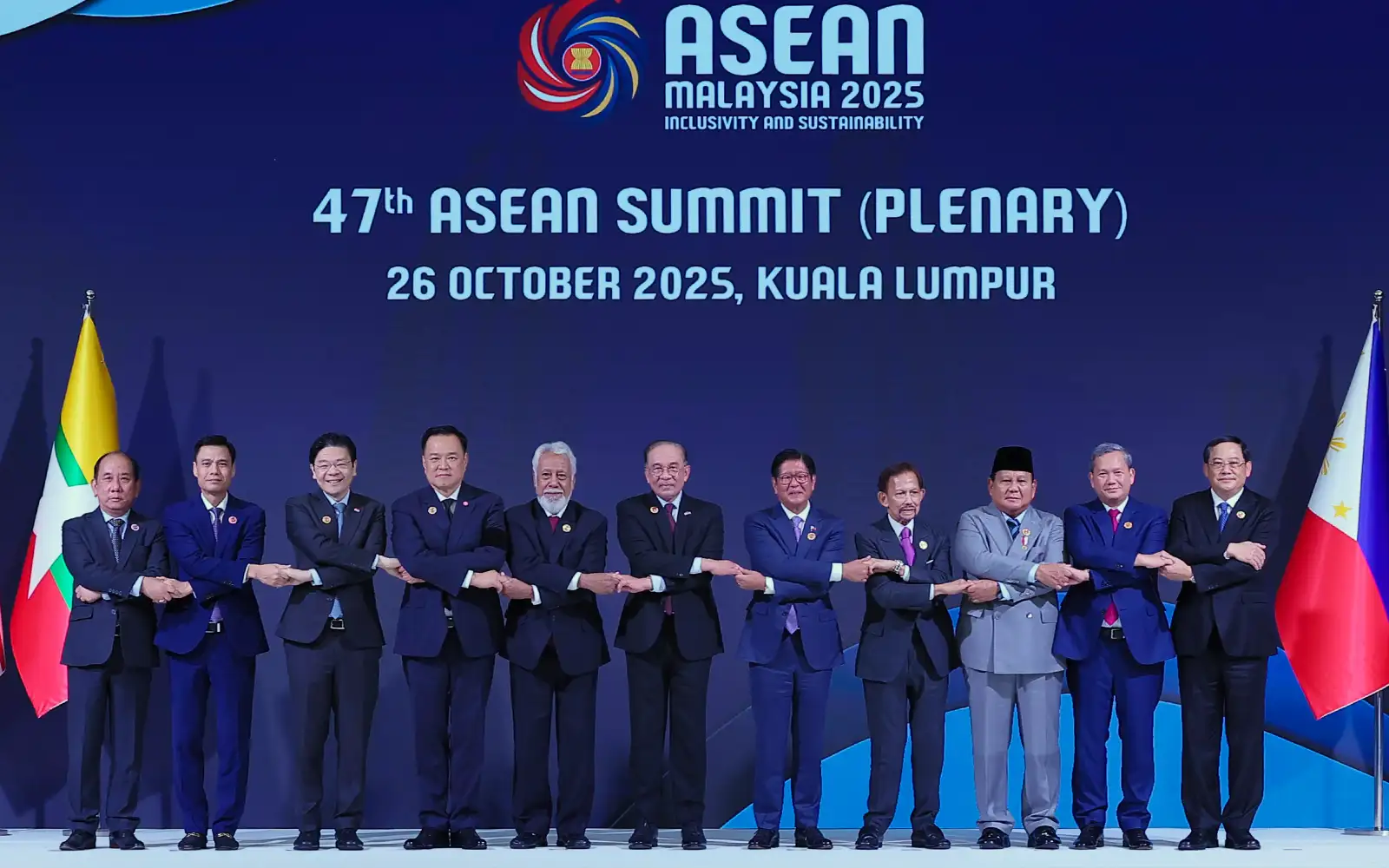
Key Developments at the 47th Asean Summit
The 47th Asean Summit, held in Kuala Lumpur from October 26 to 28, brought together leaders from across Southeast Asia and beyond. The summit took place during a period of significant geopolitical and economic shifts, with discussions focusing on trade, security, and regional cooperation.
One of the most notable outcomes was the inclusion of Timor-Leste as the 11th member of Asean. This milestone highlighted the bloc’s commitment to inclusivity and marked a significant step in the region’s integration efforts. Joanne Lin, a senior fellow at Singapore’s ISEAS–Yusof Ishak Institute, emphasized that Timor-Leste’s admission is more than symbolic. It completes the Southeast Asian map after 14 years and reflects Asean’s dedication to regional identity and unity.
In addition to Timor-Leste's membership, Asean also saw Finland join the Treaty of Amity and Cooperation (TAC). This move signifies Asean’s expanding global influence. Established in 1976, the TAC serves as a key diplomatic framework for building trust among partners within and outside the region. Foreign Minister Mohamad Hasan noted that Finland’s accession strengthens ties between Southeast Asia and Europe, promoting shared ideals and a vision for an inclusive international order.
Regional Peace and Security
A major highlight of the summit was the signing of the Kuala Lumpur Accord between Thailand and Cambodia. This agreement aims to bring an immediate ceasefire, the withdrawal of heavy weapons from contested zones, and the initiation of joint de-mining operations. The deal, witnessed by the US and Malaysia, underscores Asean’s role as a stabilizing force in the region.
Thai Foreign Minister Sihasak Phuangketkeow mentioned that Asean’s spirit of unity played a crucial role in easing tensions between Thailand and Cambodia. Despite this progress, Myanmar’s ongoing crisis remained a central topic of discussion. Prime Minister Anwar Ibrahim noted that the junta had agreed to Asean’s Five-Point Consensus, which includes an immediate ceasefire and the cessation of bombings. While there has been some progress, sporadic violence continues, highlighting the challenges of implementing the consensus effectively.
Economic Cooperation and Trade
The summit also focused on strengthening economic ties and trade relations. One significant development was the upgrading of strategic frameworks, signaling a renewed American interest in Southeast Asia amid competition with China. During the 13th Asean-US Summit, US President Donald Trump expressed his commitment to being a strong partner for the region, emphasizing shared prosperity and opportunities.
Malaysia and the US formalized a Reciprocal Trade Agreement, which retained 19% tariffs on most Malaysian exports but provided exemptions for 1,711 product lines. Investment, Trade and Industry Minister Tengku Zafrul Aziz stated that this agreement is expected to enhance policy predictability and business stability, which are critical for attracting foreign investment.
Additionally, Malaysia pledged preferential market access for US industrial exports, including chemicals, machinery, metals, and vehicles, alongside agricultural goods such as dairy, poultry, beverages, rice, and fuel-ethanol. The two countries also signed a memorandum of understanding on critical minerals cooperation, aimed at enhancing supply-chain resilience amidst US-China tensions.
Strengthening Regional Ties
Despite these developments, Asean also reinforced its economic ties with China through the Asean-China Free Trade Area 3.0 Upgrade Protocol. Chinese Premier Li Qiang issued a cautionary note on "economic coercion" and "bullying," which many interpreted as a critique of US tariff policies. This highlights the complex dynamics between Asean’s major trading partners.
Furthermore, Asean and its partners reaffirmed their commitment to economic integration during the 5th Regional Comprehensive Economic Partnership Summit. Leaders emphasized the importance of a transparent, fair, and rules-based multilateral trading system. Discussions included the establishment of a permanent secretariat to provide technical support and monitor compliance, showcasing Asean’s push for institutional strength and self-reliance in regional trade governance.
Conclusion
The 47th Asean Summit demonstrated the bloc’s ability to navigate complex geopolitical and economic challenges while reinforcing its commitment to regional cooperation and integration. From Timor-Leste’s inclusion to the signing of the Kuala Lumpur Accord and the strengthening of trade agreements, the summit marked a significant moment in Asean’s evolving role in the global landscape.