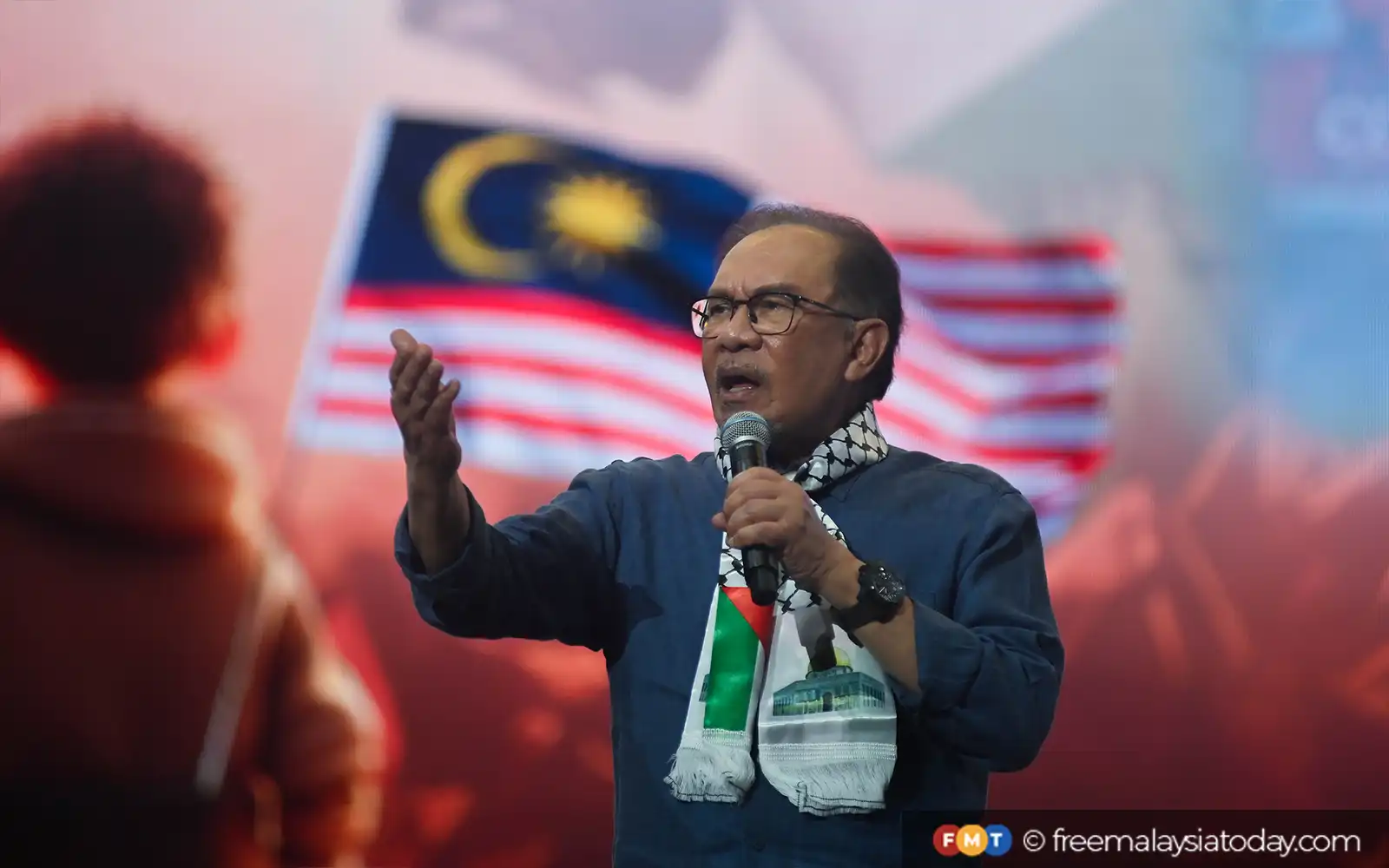
Prime Minister Anwar Ibrahim Rises in Global Muslim Influence Rankings
Prime Minister Anwar Ibrahim has made a notable leap in the 2026 edition of The World’s 500 Most Influential Muslims, published by Jordan’s Royal Islamic Strategic Studies Centre (RISSC). He is now ranked 10th globally, an improvement from his 15th position in the previous year. This achievement reflects growing international recognition of his leadership and enhances Malaysia's reputation on the global stage.
The list highlights 50 influential Muslim individuals from around the world. Notable names include the Emir of Qatar, Sheikh Tamim bin Hamad Al-Thani, who tops the list at first place; the King of Saudi Arabia, Salman bin Abdulaziz Al Saud, who ranks eighth; and Indonesian President Prabowo Subianto, who is placed 15th.
In addition to his overall ranking, Anwar has also climbed to seventh place in the specific category of the world’s most influential Islamic leaders and politicians. This marks a significant advancement from his 9th place last year, placing him ahead of Indonesian President Prabowo Subianto and Egyptian President Abdel Fattah el-Sisi.
Criteria for Influence
The rankings are based on a figure’s ability to effect significant change within the Muslim world. This influence can be measured through cultural, ideological, financial, or political means. The impact of each individual is assessed based on its significance, which may be viewed as either positive or negative depending on perspective.
Anwar’s profile in the publication emphasizes his efforts in de-escalating border tensions between Thailand and Cambodia. His role in fostering dialogue between Bangkok and Phnom Penh has reinforced Malaysia’s image as a constructive peace broker in Southeast Asia.
Advocacy for Palestine
Anwar has also been vocal in his support for the Palestinian cause. His advocacy against Israeli atrocities has drawn attention both regionally and internationally. The RISSC noted that he has consistently spoken out in favor of the Palestinian right to resist occupation.
His meetings with Hamas officials, including the late Hamas leader Ismail Haniyeh, have generated controversy. These interactions have led to criticism from the United States, particularly after some of Anwar’s social media posts offering condolences following Haniyeh’s assassination were removed.
In response, Anwar issued a strong statement, urging Meta (the parent company of Facebook and Instagram) to stop what he described as “cowardice” and cease acting as an instrument of the “oppressive Zionist Israeli regime.”
International Perception
Anwar’s increased influence reflects not only his domestic leadership but also his growing role in international affairs. His actions and statements have positioned him as a key figure in discussions about regional stability and the Palestinian issue.
As Malaysia continues to navigate complex geopolitical dynamics, Anwar’s leadership and diplomatic efforts are likely to remain central to the country’s foreign policy. His rising prominence in global Muslim influence rankings underscores the importance of his role on the international stage.
Conclusion
Prime Minister Anwar Ibrahim’s rise in the 2026 edition of The World’s 500 Most Influential Muslims marks a significant milestone in his career. His efforts in promoting peace, advocating for the Palestinian cause, and engaging with global leaders have contributed to his growing influence.
As the world continues to watch Malaysia’s role in international affairs, Anwar’s leadership will undoubtedly play a crucial part in shaping the nation’s future. His position as one of the most influential Muslim leaders globally is a testament to his impact and the respect he commands on the world stage.