The Impact of the US Government Shutdown on Economic Data
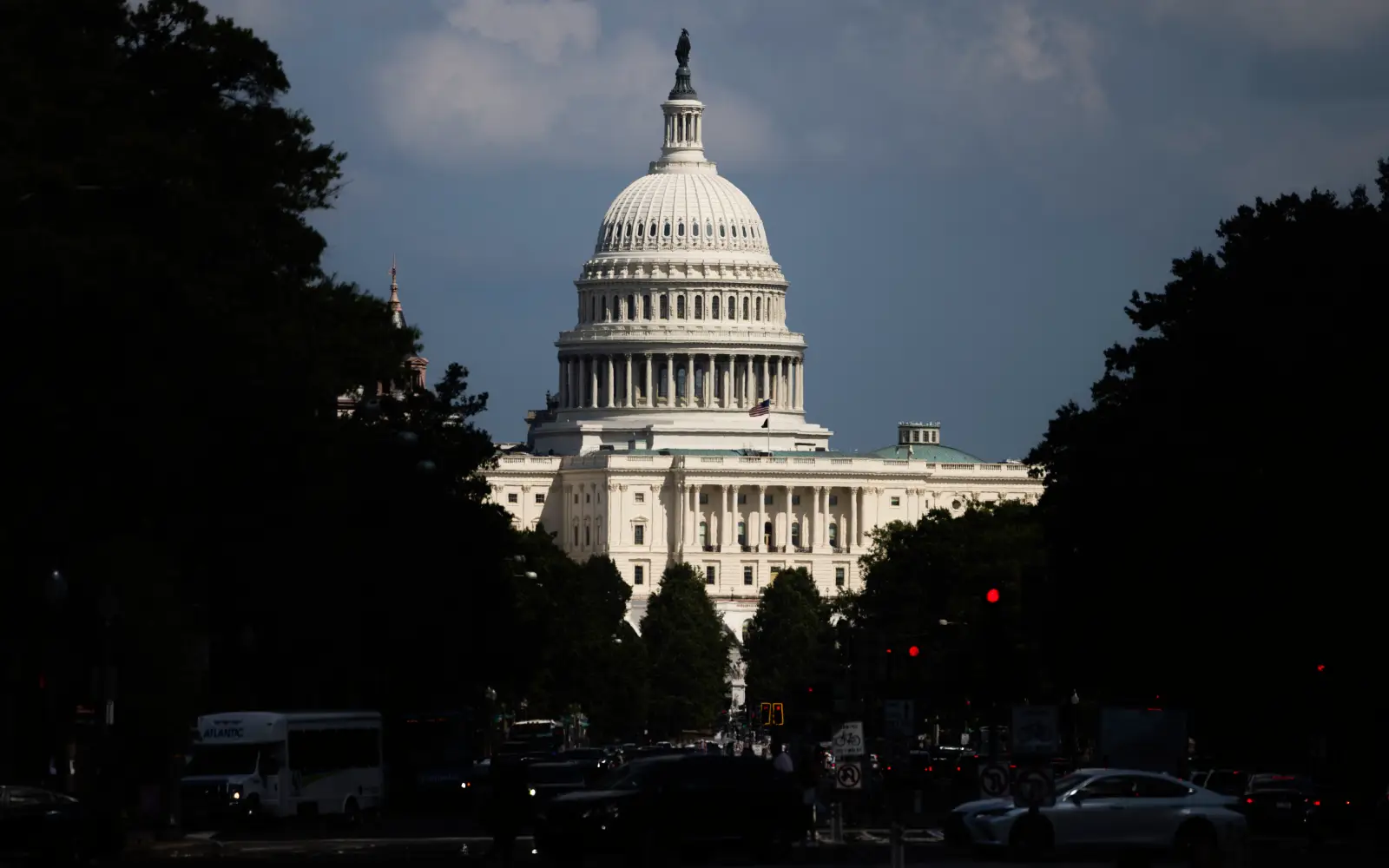
The United States is currently facing a significant challenge as a government shutdown has left a gap in crucial economic data. This situation has persisted for nearly a month, with federal agencies unable to release vital information such as labor force statistics and GDP figures. The absence of this data is expected to worsen by Thursday when the publication of GDP numbers for the July to September period is anticipated.
This shutdown has already caused delays in various reports, including employment, trade, and retail sales data. Some furloughed staff have been recalled to produce essential inflation figures needed for calculating Social Security payments. However, the lack of comprehensive data poses a risk to businesses and financial institutions that rely on these figures to make informed decisions.
Political Stalemate and Economic Consequences
Congressional Republicans and Democrats are at an impasse, each blaming the other for the shutdown. The situation remains unresolved, with millions of people's food aid hanging in the balance. Analysts warn that the growing information blackout could lead businesses to reduce hiring and investment. Heather Long, chief economist at Navy Federal Credit Union, highlighted the importance of government data, stating that every industry is trying to determine if the Federal Reserve will continue cutting interest rates.
The central bank’s decisions depend on the economy’s health, particularly inflation and the weakening jobs market. Long emphasized that organizations are finalizing their budgets for 2026, and they are uncertain about whether the coming year will bring growth, a slowdown, or a recession.
Economic Costs and Business Caution
The nonpartisan Congressional Budget Office estimates that the shutdown could cost the economy up to $14 billion. Economist Matthew Martin of Oxford Economics expects firms to proceed cautiously, especially with President Donald Trump’s tariffs adding to the uncertainty this year. He noted that businesses may reduce hiring until they see clear signs of increased demand or economic stability.
Financial markets also require data to make investment decisions and plan their moves in equities. Goldman Sachs warned that if the shutdown continues through mid-November, most delayed data releases might not come out until December. This delay could distort not just October but also November data, as the report indicated.
Challenges with Data Collection and Reliability
Long mentioned that October’s data could be lost if the shutdown persists for too long, as it was not collected. Government workers might ask people to recount economic conditions once the shutdown ends, but this becomes challenging if the delay is too long. The risk of having no data or "tainted data" increases as memories become less reliable over time.
While economists, policymakers, and business leaders have turned to private sector data, analysts stress that these cannot replace the numbers produced by the US government, which are considered the gold standard. Brookings Institution senior fellow Wendy Edelberg highlighted the uncertainty surrounding labor supply, noting significant disagreement about how many people have left the country since the start of 2025.
Signs of Strain in the Economy
Wells Fargo senior economist Sarah House pointed out that despite recent strong GDP growth, there are many signs of strain underneath the surface. She noted that not every component or group in the economy is performing equally well. House cautioned that the shutdown is unhelpful for the economy, as government workers unsure about their next paycheck may cut back on discretionary spending, such as dining out or planning trips.
The ongoing shutdown continues to create uncertainty and challenges for businesses, financial institutions, and individuals across the country. As the situation remains unresolved, the impact on the economy and its stakeholders is likely to grow.