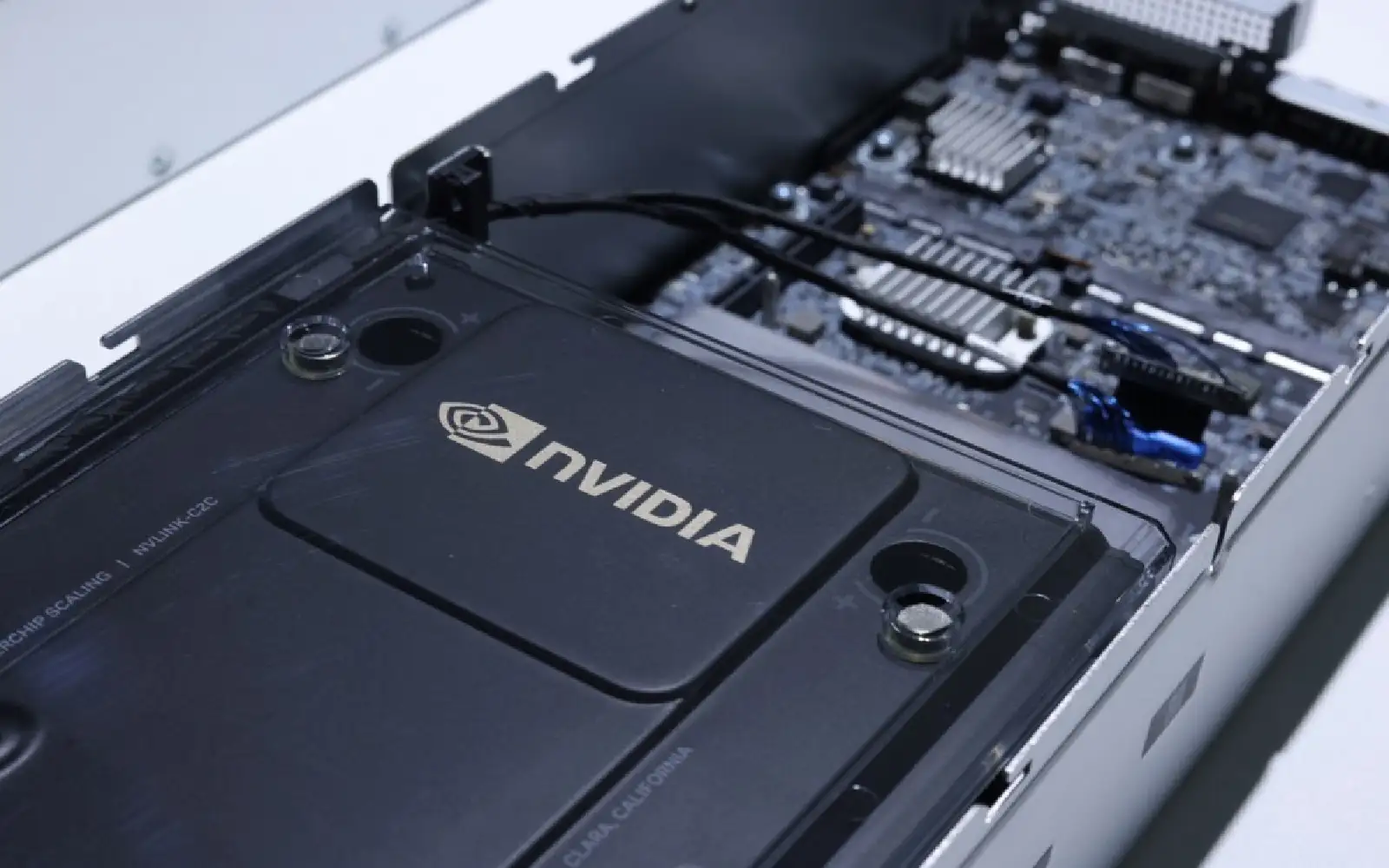
Trump and the Blackwell Chip: A Missed Opportunity
During a recent meeting in South Korea, US President Donald Trump had the chance to discuss Nvidia’s cutting-edge AI Blackwell chips with Chinese President Xi Jinping. However, the topic didn’t come up as expected. Trump told reporters aboard Air Force One that while semiconductors were part of the conversation, he did not bring up the Blackwell chip.
A day before the meeting, Trump had praised the Blackwell chip as “super-duper” and even hinted that he might bring it up during his talks with Xi. These comments likely contributed to Nvidia reaching a historic valuation of over $5 trillion. Despite this, the discussion on the Blackwell chip never materialized during the meeting.
The Thorny Issue of Semiconductor Access
The availability of high-end semiconductor chips to China has long been a point of contention between the US and China. The US has imposed restrictions on the sale of Nvidia’s most advanced AI chips to China, aiming to curb its technological advancements, especially in areas that could benefit the Chinese military.
Nvidia CEO Jensen Huang has been advocating for the Trump administration to relax these controls, arguing that China’s reliance on US hardware is beneficial for America. In response, Nvidia has been developing a new chip tailored for the Chinese market, based on its latest Blackwell architecture. This version would be less powerful than the one sold internationally but more advanced than the current H20 model allowed in China.
However, despite interest from private Chinese companies, the Chinese government has taken a cooler stance toward Nvidia. It has discouraged purchases of the H20 chip and instead promoted domestic chip manufacturers like Huawei.
Huang recently stated that Nvidia has not sought US export licenses for its newest chips due to China’s position. “They’ve made it very clear that they don’t want Nvidia to be there right now,” he said during a developers’ event. He emphasized the need for access to the China market to fund research and development in the US.
Trump’s Stance on the Matter
During the meeting, Trump avoided delving into the issue. “I said (to Xi) that’s really between you and Nvidia, but we’re sort of the arbitrator or the referee,” he remarked.
Both Democratic and Republican lawmakers have expressed concerns about allowing China greater access to advanced chips like the Blackwell. Nvidia has not commented on the matter.
An official account of the meeting published by Xinhua did not mention the chips. Instead, it cited Xi as saying both sides had good prospects for cooperation in AI.
Continued Uncertainty and Market Challenges
The Trump administration initially banned exports of Nvidia’s H20 chip to China in April. However, this decision was reversed in July after a deal was struck, allowing Nvidia to receive 15% of China sales of the H20 in exchange for export licenses.
As the US eased restrictions on Nvidia, China tightened its grip. Over the past two months, Chinese regulators have asked Nvidia to explain whether the H20 posed backdoor security risks and warned domestic firms against purchasing the chip.
At a recent event, Huang lamented that the ongoing tit-for-tat actions had reduced Nvidia’s market share for advanced AI chips in China from 95% in 2022 to nearly zero.
US trade representative Jamieson Greer, speaking aboard Air Force One, said that after Trump’s meeting with Xi, Nvidia would engage with China to explore possibilities. “There’s so many chips we already sent to China, a lot of advanced chips,” he added.
However, two individuals familiar with the discussions in the Chinese market expressed skepticism about Beijing quickly changing its stance on Nvidia chips. They noted that China does not want to settle for inferior chips, as the H20 is far behind the Blackwell in performance. They also mentioned that China believes its domestic rivals could soon catch up with the H20.
One source indicated that China might still consider the downgraded version of the Blackwell chip, known as the B30A, if Washington approves its sale to China.
The situation remains sensitive, with sources speaking on condition of anonymity.