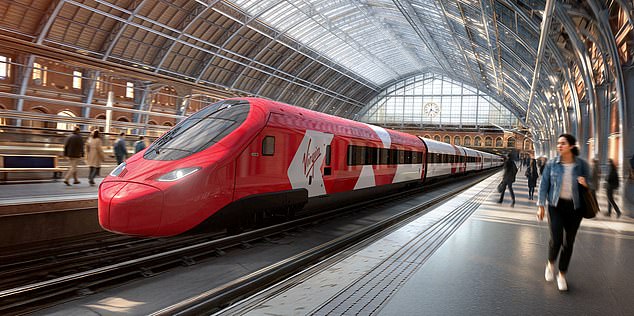
Virgin Trains Set to Challenge Eurostar's Monopoly
Virgin Trains is preparing to introduce international train services through the Channel Tunnel, marking a significant shift in the rail market by ending Eurostar's more than 30-year dominance on the route. This development comes after the Office of Rail and Road (ORR) approved access for Sir Richard Branson’s company to use Eurostar’s Temple Mills depot in East London for maintaining and storing its trains.
The Temple Mills depot plays a crucial role in launching Channel Tunnel services that can compete with Eurostar. It is the only train depot accessible from the High Speed 1 line, which connects London to the tunnel. Since its opening in 1994, Eurostar has maintained a monopoly on train services through the tunnel, arguing that there was no space for another operator at the depot alongside its growth plans.
With the regulator’s approval, Virgin Trains aims to launch competing services as early as 2030. However, the company still needs additional regulatory approvals from the ORR for track access and safety, as well as a commercial agreement with Eurostar, which operates the Temple Mills depot.
Sir Richard Branson expressed his excitement about the decision, stating, "The ORR's decision is the right one for consumers. It's time to end this 30-year monopoly and bring some Virgin magic to the cross-Channel route."
He added, "Virgin is no stranger to delivering award-winning rail services, and just as we have successfully challenged incumbents in air, cruise and rail, we're ready to do it again. We're going to shake-up the cross-Channel route for good and give consumers the choice they deserve."
Eurostar currently operates trains from London's St Pancras station to Paris, Brussels, and Amsterdam. Three other companies—Spanish group Evolyn, start-up Gemini Trains, and state-owned Trenitalia—had applied to the regulator to use the Temple Mills depot but were rejected.
The ORR stated that Virgin Trains’ plans were more financially and operationally robust than those of other applicants. The company provided clear evidence of investor backing and an agreement in principle to deliver the necessary rolling stock.
Martin Jones, the regulator’s deputy director for access and international, said, "With this decision, we are backing customer choice and competition in international rail, unlocking up to £700 million in private sector investment and stimulating growth. While there is still some way to go before the first new services can run, we stand ready to work with Virgin Trains as their plans develop."
Potential Impact on Ticket Prices
The arrival of Virgin Trains could lead to lower ticket prices for travelers between London and mainland Europe. Competition generally helps lower prices for consumers by forcing operators to compete for customers.
In July, rail minister Lord Hendy wrote to the ORR, stating that the arrival of competition would encourage "greater differentiation in service provision" and promote "competitive prices." In response to today’s decision, he said it will "give passengers greater choice, better value and improve connectivity for millions."
He added, "Depot capacity should not be a barrier to greater competition and growth. We are therefore exploring plans to establish new depot capacity in the UK, supported by private investment, to meet the needs of the market and will set out further plans in due course."
Virgin Group's Return to the UK Rail Market
Virgin Group has not operated trains in the UK since Virgin Trains' contract for the West Coast Main Line (WCML) expired in December 2019. In July, the ORR rejected the company's application to run open access services on the WCML, serving cities such as London, Birmingham, Liverpool, and Manchester.
Despite these challenges, Virgin Trains remains determined to make its mark on the international rail market. With the support of the ORR and the potential for increased competition, the company is poised to bring new energy and innovation to the cross-Channel route.