China’s Shenzhou-21 Mission to Include Youngest Astronaut and Lab Mice
China is preparing for its next manned space mission, which will see the launch of the Shenzhou-21 spacecraft from the Jiuquan Satellite Launch Center in northwest China. The mission is scheduled to take off at 11:44 PM on Friday (15:44 GMT), according to the China Manned Space Agency (CMSA). This mission marks a significant milestone as it will include the country’s youngest astronaut ever to undertake a space flight.
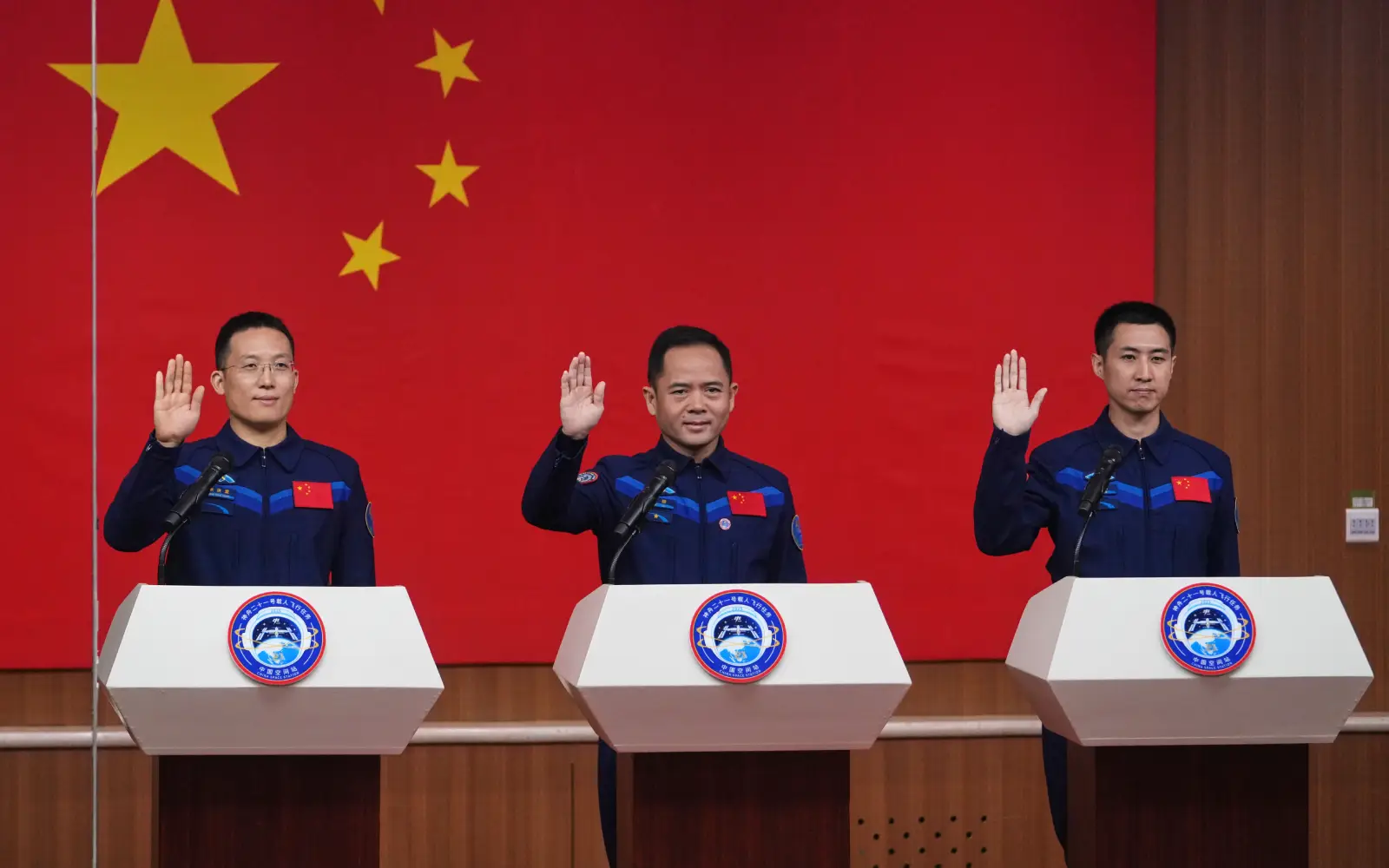
The crew of the Shenzhou-21 mission consists of three astronauts, led by veteran space pilot Zhang Lu. Zhang Lu previously participated in the Shenzhou-15 mission over two years ago, making him a seasoned astronaut. He will be joined by payload specialist Zhang Hongzhang and flight engineer Wu Fei, who are both embarking on their first space journey.
Wu Fei, who recently turned 32, is set to break records as the youngest Chinese astronaut to go on a space mission. His inclusion in the crew highlights the growing emphasis on younger generations in China's space program. In addition to the human crew, the mission will also carry four laboratory mice—two male and two female—as part of China’s first in-orbit experiments on rodents. These experiments are expected to provide valuable insights into the effects of space travel on living organisms.
The Tiangong space station, where the crew will spend their time, is a key component of China’s ambitious space program. It is designed to accommodate teams of three astronauts who rotate every six months. The station represents a major achievement for China, which has invested heavily in its space initiatives to compete with other global space powers like the United States and Russia.
China’s space program, the third to send humans into orbit, has made remarkable progress in recent years. It has successfully deployed robotic rovers on Mars and the Moon, demonstrating its technological capabilities. Under the leadership of President Xi Jinping, the country has accelerated its plans to realize its "space dream."
One of the primary goals of the CMSA is to send a crewed mission to the Moon by 2030. The agency aims to establish a base on the lunar surface, marking a significant step forward in space exploration. To achieve this, the CMSA has outlined several crucial tests that are currently underway. These include testing the Lanyue lunar lander and the Mengzhou manned spacecraft, both of which are essential components of the future lunar missions.
The Shenzhou-21 mission not only showcases China’s advancements in space technology but also underscores its commitment to scientific research and exploration. With the inclusion of young astronauts and experimental animals, the mission represents a blend of human ambition and scientific curiosity. As China continues to push the boundaries of space exploration, the world watches closely to see how it will shape the future of space travel.