Understanding Shrinkflation and Its Impact on Everyday Products
Shrinkflation, a term that has become increasingly familiar to consumers, refers to the practice of reducing the size or quantity of products while keeping the price the same. This strategy has been widely adopted by manufacturers and retailers in response to rising production costs, particularly in the food and household goods sectors. As a result, many everyday items such as toothpaste, coffee, chocolate bars, and medicines are being affected.
A recent study by Which? revealed that some products have seen price increases of up to 236 per cent per 100g due to increased costs in food production. This has led supermarkets to seek ways to maintain their profit margins without significantly increasing prices. Instead, they have opted for shrinkflation, which allows them to adjust product sizes without making the price changes obvious to consumers.
Sarah Coles, head of personal finance at Hargreaves Lansdown, explained that food manufacturers are under pressure from various factors, including rising wages and higher ingredient costs. She noted that brands must balance maintaining their profit margins with the risk of losing customers to cheaper alternatives.
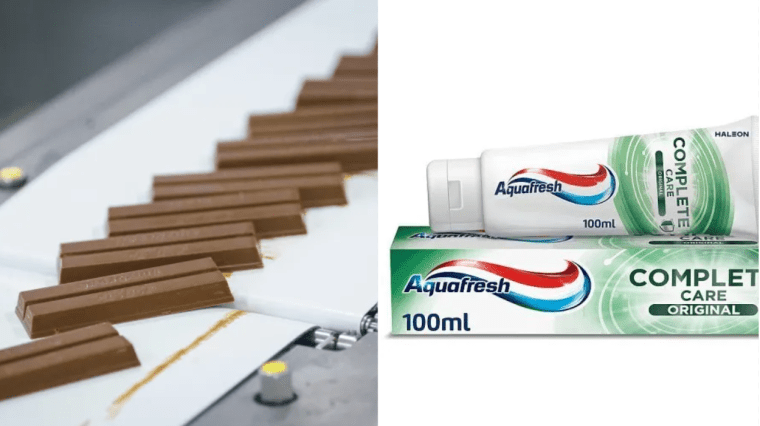
- One of the most notable examples of shrinkflation is the Aquafresh Complete Care original toothpaste. At Tesco, Sainsbury’s, and Ocado, the price has increased from £1.30 for 100ml to £2 for 75ml, resulting in a 105 per cent increase per 100ml.
- Chocolate brands like Cadburys have also experienced shrinkflation. Earlier this year, Cadburys reduced its “little bars” multipack from six bars to four bars, while keeping the price the same.
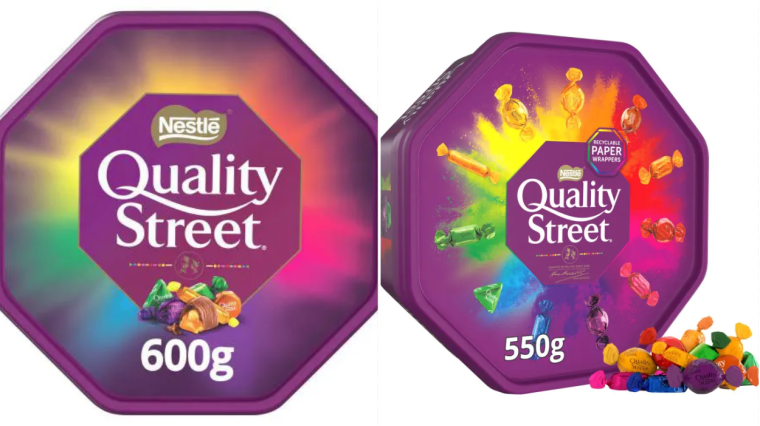
- Quality Street tubs have also decreased in size from 600g to 550g, with prices rising at Morrisons from £6 to £7.
Another extreme example highlighted by Which? is Sainsbury’s Scottish Oats, which has shrunk from 1kg to 500g, with the price increasing from £1.25 to £2.10. This equates to a 236 per cent rise per 100g.
Why Do Brands Get Away With Shrinkflation?
In the past, shrinkflation often sparked outrage among consumers, leading to social media complaints and even boycotts. A 2023 report by Barclays found that two-thirds of shoppers had noticed shrinkflation, with 20 per cent actively switching away from brands offering downsized products. However, experts suggest that consumers have become more accustomed to this practice over time, leading to reduced expectations.
Jack Shaw, a retail expert at Shawfire, noted that while a few years ago getting fewer crisps in the same packet might have caused anger, today most shoppers simply accept it. He explained that psychologically, people adjust by lowering their expectations and continuing to buy out of convenience or habit.
The Future of Shrinkflation
Despite its current prevalence, experts believe that shrinkflation cannot continue indefinitely. At some point, products may become too small to be profitable to produce. Vineta Bajaj, chief financial officer at Holland and Barrett, stated that shrinkflation has reached its practical limit. She mentioned that manufacturers can’t keep cutting pack sizes without damaging value perception or risking customer loyalty.
- The cost of redesigning packaging and reconfiguring production lines often outweighs any savings made by reducing contents further.
- Brands are likely to focus on transparency and efficiency rather than subtle reduction. This could involve open price increases, smaller product ranges, or recipe reformulation to manage costs.

Jack Shaw added that long-term resentment among shoppers is quietly building, and brands may eventually lose customer loyalty. He emphasized that transparency may be the only solution going forward for brands to preserve credibility in an era of shrinking value.
Conclusion
As shrinkflation continues to impact everyday products, consumers are becoming more aware of the changes. While brands may find temporary relief through this strategy, the long-term sustainability remains questionable. With rising production costs and consumer expectations shifting, the future of shrinkflation may see a move towards greater transparency and efficiency in product offerings.